What medical supply pickup consolidation should solve
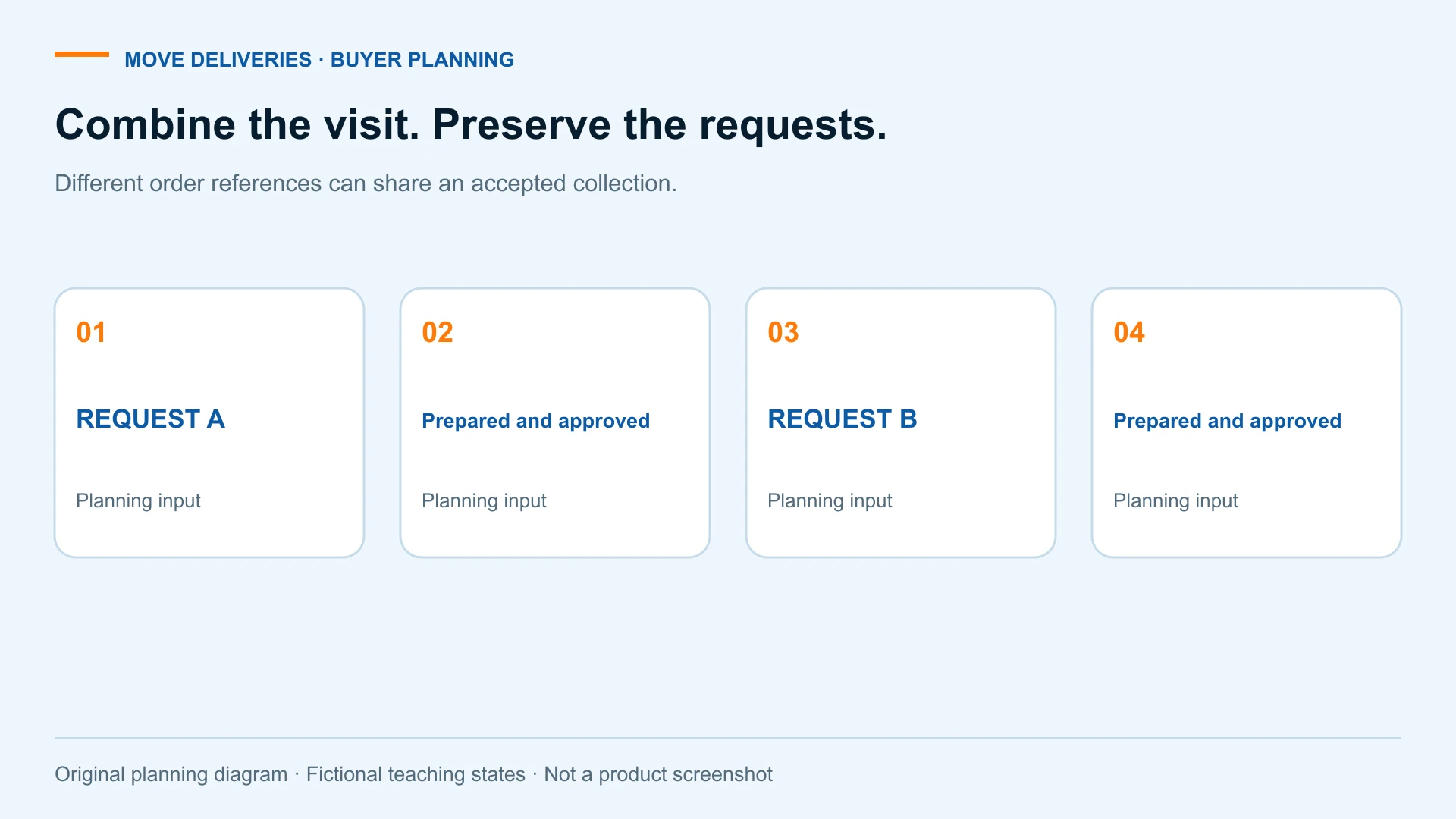
Medical supply pickup consolidation means reviewing whether several prepared supplier requests can share one accepted courier collection while keeping each request, destination and package scope identifiable. It is a release-planning decision, not permission to merge product records or treat unrelated orders as one undifferentiated shipment. The benefit is a simpler collection discussion when the work genuinely fits together.
At a supplier’s dispatch area, several departments can have work ready for the same part of the day. Without a shared release view, staff may request separate visits before realizing that the prepared units could be collected together. The opposite mistake is just as disruptive: holding every request for one imagined pickup while a destination’s receiving window or an unfinished order makes the combined plan impractical.
This guide gives seven checks, an original release matrix and a fictional split-or-combine exercise. It covers the collection of approved packaged supplies, not clinical inventory decisions, product compatibility determinations or transport rules for regulated materials. The responsible organization must establish preparation and handling requirements. Do not combine shipments merely because their boxes fit on the same shelf.
Start by stating the problem you want to solve. Are duplicate visits interrupting release staff? Are related prepared requests being booked without a coordinated view? Or is someone proposing consolidation mainly because the daily total looks small? The answer determines what to review. Fewer visits alone is not evidence of a better arrangement if it creates unconfirmed receiving or readiness assumptions.
In this article
- What medical supply pickup consolidation should solve
- 1. List candidate requests without changing their identity
- 2. Compare actual readiness windows
- 3. Keep receiving requirements attached to every request
- 4. Review combined package scope, not just order count
- 5. Agree the collection group with the provider
- 6. Stage the accepted group so release staff can verify it
- 7. Review whether consolidation improved the actual workflow
- Use a medical supply pickup consolidation matrix
- A fictional choice: combine two, review the third separately
- A split-or-combine review your team can repeat
- Questions to resolve before combining the visit
1. List candidate requests without changing their identity
Build the candidate list from actual requests and clearly label any proposed work. Record each reference, releasing point, destination, prepared package scope and customer owner. Keep the original records intact. A collection group can organize a conversation without replacing the identity of the requests that need separate proof, receiving information or commercial treatment.
Different departments may use similar shorthand for different work. Ask each owner which units belong to the listed request and whether the request is authorized for release. Do not rely on a carton’s appearance to infer the intended destination. A shelf label saying “afternoon deliveries” is a staging description, not a complete instruction.
The medical supplier delivery page helps frame the transport service. This article addresses a narrower preparation question: which supplier requests could be reviewed for a shared collection? It does not promise a particular pickup frequency or automatic order-grouping feature.
2. Compare actual readiness windows
Ask the release owner when each request’s packaged units are expected to be ready and when readiness will be confirmed. Separate a completed preparation state from an estimate. A combined pickup built around the last unconfirmed order can delay the conversation about work that is already ready. The matrix should make that tradeoff visible rather than treating every request as equally available.
Identify whether one proposed collection period overlaps the confirmed readiness of the candidate requests. Do not invent a universal waiting period. The appropriate discussion depends on the accepted service, receiving requirements and the organization’s preparation procedures. If the overlap is not confirmed, record the unanswered question and the person who can resolve it.
A supplier may choose to propose a smaller confirmed collection while leaving an unfinished request for a separate review. That is a planning option, not a recommendation to split any clinical or regulated shipment. Responsible personnel determine what can be released and under which requirements. Your role is to describe the approved scope clearly enough for the service team to review it.
3. Keep receiving requirements attached to every request
Requests collected together can still have different destinations or receiving windows. Review each one individually before assuming a shared visit simplifies the rest of the day. The relevant receiving point might be a designated supply desk rather than the address’s general reception. Confirm the requirement with the person responsible for accepting that delivery.
An earlier collection does not automatically make every destination available earlier. A later collection does not automatically preserve every receiving requirement. Keep these facts separate from the supplier’s preference for fewer visits. If the combined proposal cannot fit the receiving arrangement, ask what accepted alternative is available instead of forcing every order into the same group.
Our receiving-window guide addresses the destination-side planning issue. Use it alongside this release matrix. Neither tool authorizes a driver to choose a different receiving point or leave supplies with an unapproved person.
4. Review combined package scope, not just order count
Add the prepared transport units and packaged dimensions that the service conversation requires. A combined group with fewer order references may still need more space or a different loading arrangement than several small parcels. Order count is not a substitute for understanding the actual packaged work.
Describe any equipment or loading requirements through the approved process. Do not infer lifting assistance, ramps, securement equipment or special handling from the word “cargo van.” The provider needs enough accurate information to review the vehicle and people required. The equipment delivery guide covers that separate preparation question.
Keep material-specific suitability decisions with qualified personnel. Consolidation should not introduce unsupported assumptions about co-loading, packaging, temperature conditions or hazardous items. If a candidate request has requirements not yet reviewed, mark it outside the confirmed combined scope. That is more useful than writing “special care” beneath an otherwise accepted-looking group.
5. Agree the collection group with the provider
Present the proposed references, readiness information, receiving requirements and combined packaged scope. Ask the provider what arrangement can be accepted. A customer-created group is not automatically a single service request, a reserved collection or a quoted price. The accepted commercial and operational structure must come from the agreed process.
Check how the group should be identified in supported records. The nonprofit GS1 traceability standard distinguishes identifiers for items, locations and logistic units. That broader distinction supports keeping request identity and transport grouping separate. It does not establish that MOVE uses particular GS1 identifiers or that your organization must adopt them for this worksheet.
If the provider accepts only part of the proposal, record the included references and excluded ones. Do not use a general “collection confirmed” message that leaves staff to guess whether every candidate belongs to the visit. An accepted subset and an open request can coexist. Their records should make that situation understandable.
6. Stage the accepted group so release staff can verify it
Prepare a clear release list for the accepted collection, following your organization’s packaging and staging procedures. Staff should be able to match each prepared unit to its request and destination without relying on memory. A combined collection can simplify the visit while increasing the need for a readable list of what belongs to it.
Keep excluded or still-unconfirmed work separate in the planning record. Do not allow nearby boxes to appear included merely because they share a staging area. If a unit is added or removed after agreement, use the supported scope-change process. A handwritten addition to the local list may not update the provider’s current instructions.
At collection, resolve any count or reference difference through the approved release process. This is not a direction to open packages, inspect clinical contents or accept a unit whose requirements are unresolved. The purpose is to confirm the authorized transport scope. An unexpected carton should trigger the appropriate question, not an improvised assumption that it can ride along.
7. Review whether consolidation improved the actual workflow
After the accepted work is complete, review the outcome against the original problem. Did release staff have a clearer collection list? Did an unfinished request remain visible? Were receiving requirements preserved? Use the evidence available for that collection instead of making a broad efficiency claim based only on the number of visits.
Separate potential savings from verified commercial results. A reduced visit count does not establish a reduced charge, because the accepted scope and pricing structure may differ. Likewise, a combined collection that needed a lengthy scope clarification may not have simplified preparation. Record the actual experience and discuss changes with the responsible team.
Do not make every future request wait for consolidation simply because one exercise went well. Identify the conditions under which the arrangement was useful: compatible readiness, confirmed receiving and accepted packaged scope. Where those conditions differ, review the next proposal independently. The aim is a repeatable decision process, not a rule that one visit is always better than two.
| Fictional candidate | Readiness | Receiving | Collection decision |
|---|---|---|---|
| TRAIN-S1 | Confirmed packaged scope | Confirmed requirement | Eligible for provider review |
| TRAIN-S2 | Confirmed packaged scope | Confirmed requirement | Eligible for provider review |
| TRAIN-S3 | Dimensions and timing unresolved | Not yet confirmed | Separate open decision |
Use a medical supply pickup consolidation matrix
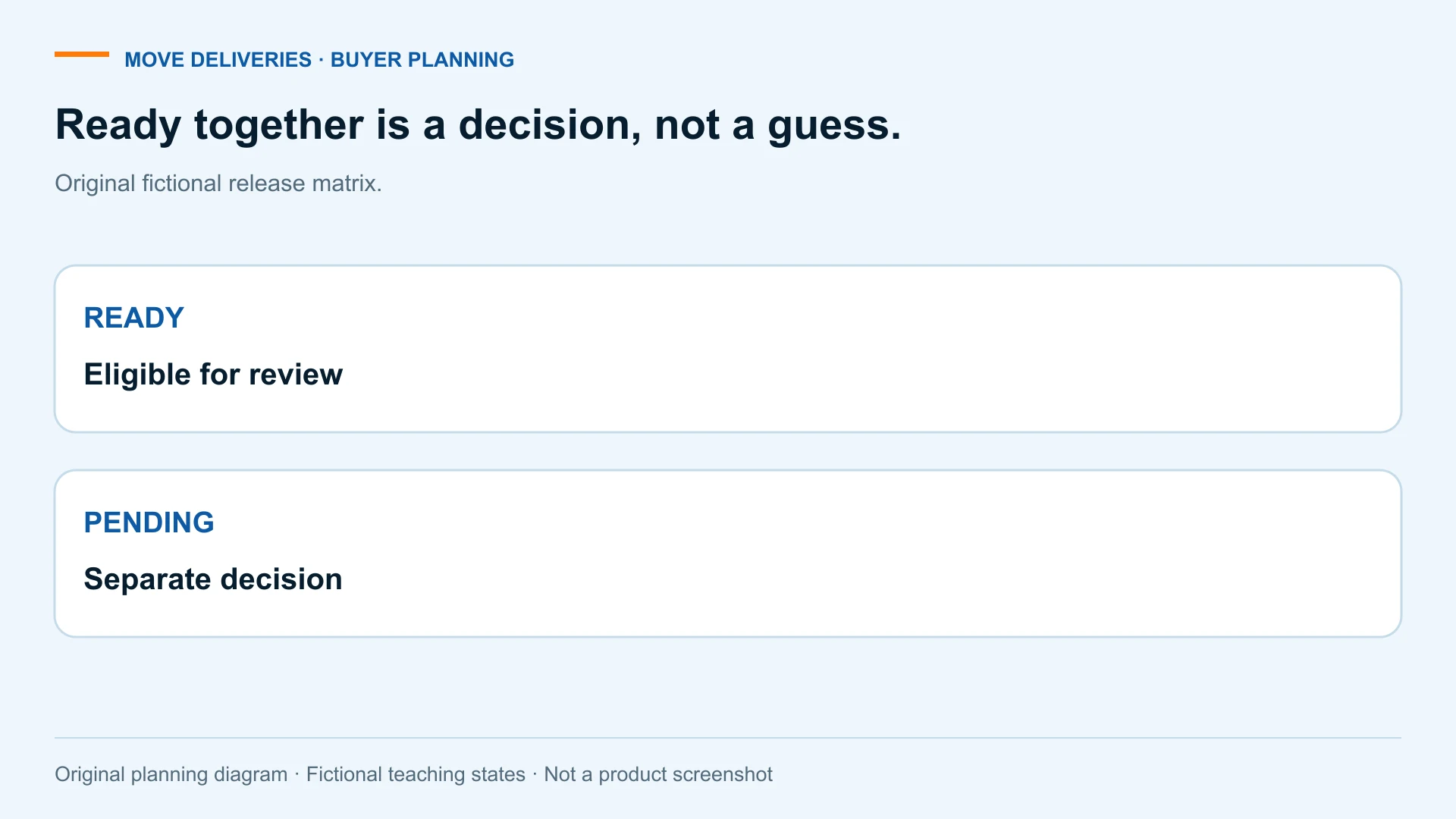
The original matrix below uses fictional requests to show the difference between candidate and accepted work. TRAIN-S1 and TRAIN-S2 have confirmed readiness and are eligible for provider review. TRAIN-S3 has unresolved preparation. None is automatically included in a booked collection. Add a column for the provider’s response after the actual proposal is reviewed.
Recommended fields include request reference, releasing point, destination, readiness evidence, packaged unit count, relevant loading requirements, receiving arrangement, customer owner and accepted group reference where supported. Make an unknown answer explicit. A blank receiving field should not be interpreted as “any time.” A blank package count should not silently become one.
Maintain the matrix as a dated working record. If the preparation owner changes a readiness answer, identify the revision and review whether it changes the accepted collection. Keep the group’s scope readable for a staff member arriving on the next shift. The original diagram illustrates these relationships; it is not a screenshot of MOVE’s proprietary platform or a claim about automatic grouping.
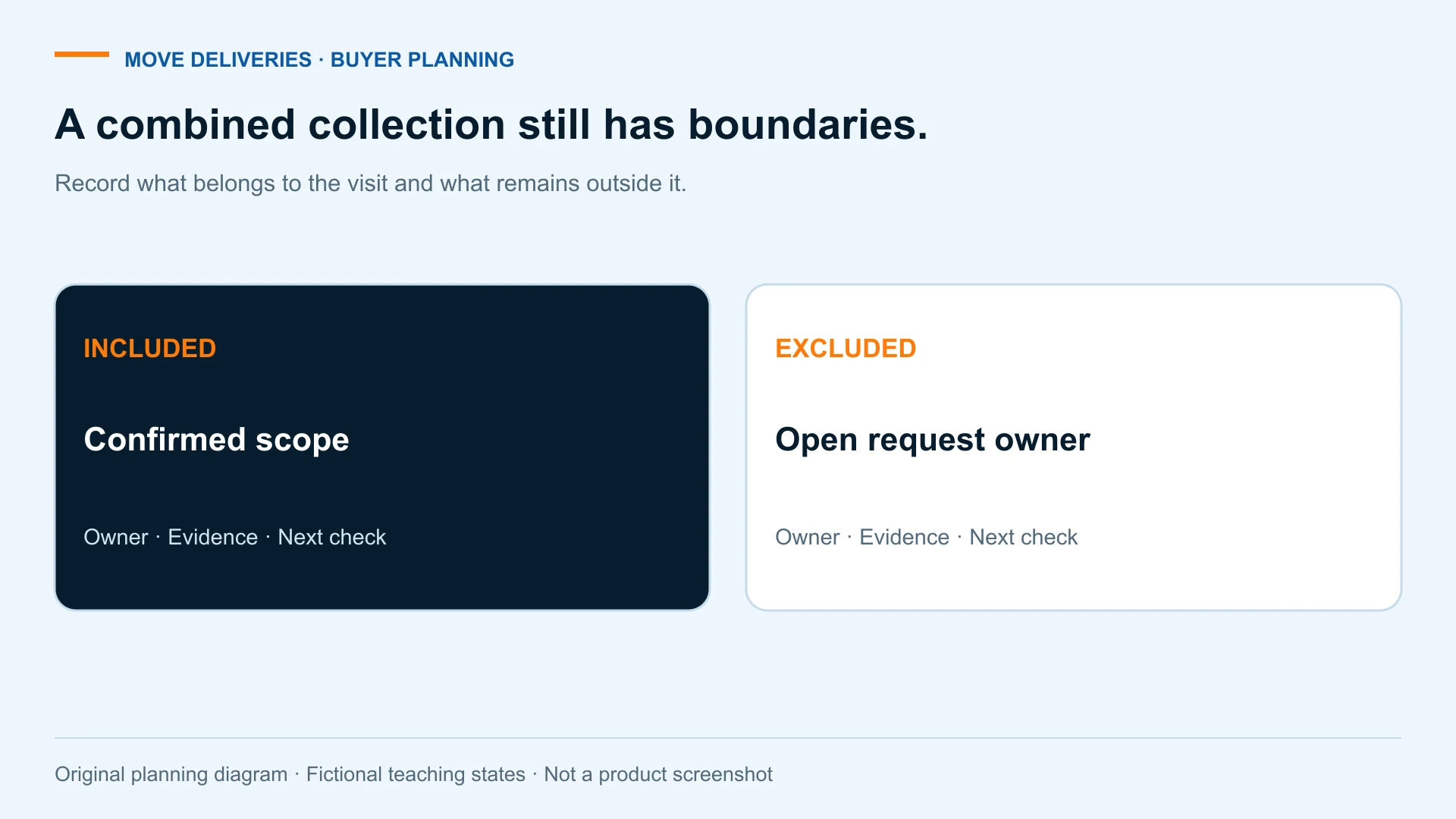
A fictional choice: combine two, review the third separately
Imagine three supplier departments proposing work for one afternoon. Two have prepared cartons with confirmed receiving arrangements. The third expects an equipment package but cannot yet confirm its packaged dimensions or release time. The coordinator lists all three candidates, then asks the provider to review a proposed collection of the first two while preserving the third as an open decision.
If that subset is accepted, the releasing team receives a list naming only the two included references. The equipment owner retains responsibility for the missing facts. When those facts become available, the third request receives its own service review. It is not automatically added to the approaching vehicle simply because the driver will already be at the site.
In a second version of the exercise, the third package becomes ready before the provider has accepted any arrangement. The coordinator can revise the proposal and request a review of the complete packaged scope. The change in timing matters: updating a proposal and changing an accepted collection are different actions. Keep the stage explicit so staff do not confuse the two.
The lesson is not that equipment should always travel separately or that two requests make an ideal group. The lesson is to preserve evidence and decision ownership while discussing a simpler visit. Your real proposal needs its own readiness, receiving and suitability review. Fictional examples cannot establish vehicle availability, savings or a universal consolidation threshold.
A split-or-combine review your team can repeat
Take a fictional candidate list and review it twice: once assuming every request shares a collection, then once with each request considered separately. Do not book either scenario during the exercise. Ask what facts change between them. If the only apparent difference is visit count, the team may not yet have considered release overlap, receiving requirements or the combined packaged scope.
Assign one participant to read the release evidence and another to read the receiving evidence. A third can identify which questions must reach the provider. Each participant should use the same dated matrix. Where the records disagree, mark the difference explicitly and assign the owner who can clarify it. Do not resolve the exercise by asking a participant to guess what the missing field probably means.
Then remove one confirmed readiness answer from the fictional scenario. Does the team still label the whole group ready? If so, revise the instruction that describes readiness. Add an unexpected packaged item and ask who reviews the new scope. These small changes test whether the matrix remains usable under ordinary preparation differences rather than only under the ideal example.
Keep the result as a preparation-process review. It does not measure a real courier’s efficiency, certify loading suitability or establish a price. The useful output is a short list of information your staff must confirm before proposing the next combined collection. Give each improvement an owner and review it against an actual accepted request later.
Questions to resolve before combining the visit
Can requests with different destinations share a pickup? They can be proposed for review, but that does not establish the accepted delivery arrangement. Can an unfinished order be added later? Use the supported scope-change process and confirm the response. Does consolidation erase individual proof requirements? No; determine what evidence each accepted request requires before collection.
Should all requests be held for the same visit? Not automatically. Review actual readiness, receiving and customer priorities through the responsible roles. Does the worksheet certify co-loading suitability? No. Qualified personnel and the provider must address applicable material-specific requirements. Does combining visits guarantee a lower price? No. Review the accepted commercial scope rather than inferring a discount.
MOVE coordinates local same-day medical delivery through its proprietary platform. For a defined collection proposal, request a Quick Quote. For recurring supplier work, Start An Account and bring the release matrix. A simpler visit starts with a clearer boundary: which work is actually included, which work is not, and which decision still needs an answer.