

Hospital Courier Services
Keep Items Moving. Keep Your Team Focused On Care.
A missing supply should not turn a nurse or coordinator into a delivery driver. MOVE helps you plan hospital courier services between local care sites, with clear pickup instructions, receiving contacts and delivery updates. Give your staff a defined way to move the items their work depends on.
HIPAA-trained couriers
Bloodborne-pathogen training
Insured couriers
Electronic proof of delivery
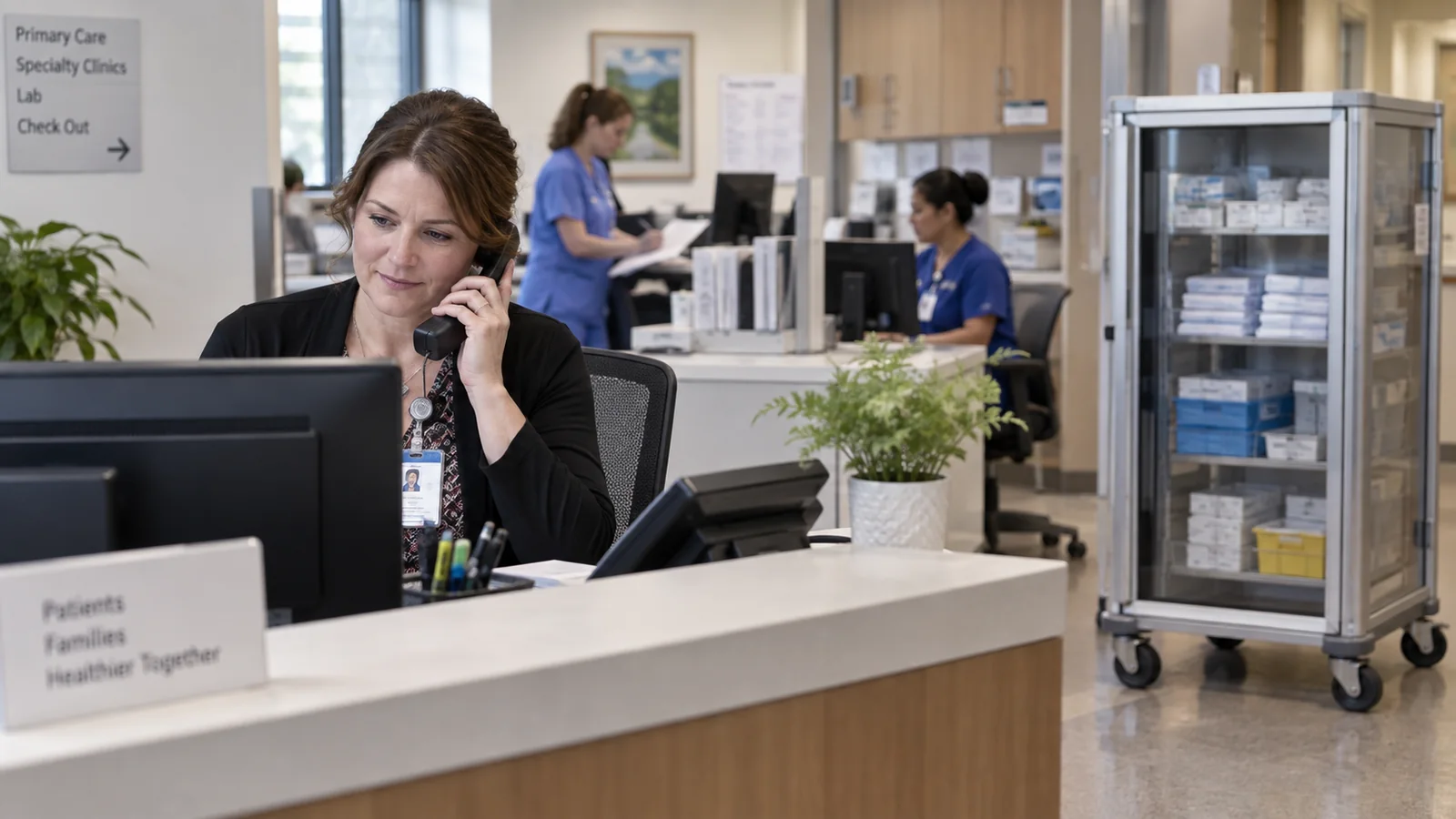
Protect Staff Time
Let Your Teams Focus On The Work They Are Trained To Do.
How much staff time goes into finding someone to take an item to another site? A repeat courier plan gives those transfers a place in your workflow. Identify what is ready, where it should be collected and who can receive it. Your team can then prepare for receiving instead of organizing a new delivery run each time.
Coordinate repeat transfers without assigning a staff member to every run.
Keep receiving contacts and delivery windows in the service plan.
Where MOVE Fits
Local Transfers Without Another Staff Delivery Run.
Connect the collecting department to the right receiving desk. Review urgent transfers, recurring replenishment or reserved courier capacity around hospital and clinic access.
Between Local Facilities
Connect hospitals, outpatient clinics and affiliated care sites with scheduled local transfer routes.
Urgent Supply Needs
Request time-sensitive local delivery when an item is needed outside the regular schedule, subject to service confirmation.
Repeat Replenishment
Align planned supply runs with department receiving hours and agreed receiving procedures.

Get To The Right Receiving Point
The Hospital Address Is Only The Beginning.
A hospital’s main entrance may be the wrong place for a delivery. Include the building, approved entrance, department and receiving contact—not just the street address. If access changes after hours, tell us before pickup. Your hospital courier plan should explain who gives direction when a receiving point is closed or a department changes its request.
Document department and access instructions.
Plan an escalation path for changing priorities or closed receiving points.
A Plan For Your Workday
Match The Service To The Work Between Your Sites.
Not every transfer is an emergency, and not every delivery belongs on the regular route. Separate routine work from urgent requests so each gets the right timing, receiving instructions and review.
An Urgent Local Transfer
When an item is needed outside the normal schedule, provide its ready time and the receiving deadline. MOVE reviews the local request against courier capacity, access and handling needs. STAT delivery is for items; it is not patient transport or emergency medical care.
A Predictable Supply Run
Use scheduled pickups for repeat transfers, or a fixed route to connect several care sites. Review department hours and stop duration together. A route that looks simple on a map still needs to fit the way each facility receives its deliveries.
Capacity Around Your Operation
For ongoing delivery work, discuss dedicated local courier coverage. Agree on service hours, approved pickup points, vehicle requirements and backup arrangements. Extra stops and changing priorities need a defined review process rather than being assumed to fit every shift.
How it works
From your request to their doorstep.
Your team sets the need. MOVE helps confirm the plan, coordinate the courier and document delivery completion through our proprietary platform.
-
Step 1
Share the route. Confirm the service.
Send the local addresses, package-ready time and receiving deadline. Your request is reviewed before a delivery is booked.
-
Step 2
The right courier. A clear pickup plan.
MOVE coordinates the driver, timing and instructions so pickup starts with shared expectations.
-
Step 3
See progress. Prepare for the arrival.
Follow your local delivery in our customer portal and keep the receiving team informed as the courier approaches.
-
Step 4
A confirmed delivery. A record to keep.
The courier follows the agreed receiving instructions. Electronic proof helps your team verify the delivery and close the loop.

Before You Choose
Make Hospital Courier Services Work For The Receiving Desk.
Would a courier know which department can accept the item, or would your staff have to find them another entrance?
- Identify the department, approved entrance and receiving hours—not only the hospital address.
- Keep the collecting and receiving contacts attached to the transfer request.
- Agree on the evidence that confirms receipt and the contact for an exception.
Use The Hospital Receiving Checklist
Planning reference: HHS guidance on limiting unnecessary health-information disclosures. Confirm the requirements for your materials and service.
Questions, Answered
Hospital Courier Questions
For the receiving team: use our hospital handoff checklist to prepare access and contact instructions. For your organization’s privacy procedures, review the HHS minimum necessary guidance with your privacy lead.
Can delivery go to a specific hospital department?
Include the building, department, approved entrance, receiving contact and any access instructions. The final handoff point is confirmed as part of the service plan.
Can scheduled and urgent deliveries be combined?
Yes. A recurring route can be discussed alongside a separate process for urgent requests. Each urgent delivery still needs availability and timing confirmation.
Do drivers receive healthcare-related training?
MOVE confirms background-checked drivers and HIPAA and bloodborne-pathogen training. Site-specific procedures and any additional handling requirements are reviewed for the program.
Do you move patients or provide ambulance services?
No. This service concerns local courier delivery of items and supplies, not patient transport or emergency medical care.
What Should We Include In A Hospital Courier Request?
Provide pickup and delivery addresses, the specific departments, ready time, receiving deadline and a contact at each end. Identify the item, package count and handling or access requirements. Use the public form for logistics details—not patient identifiers, clinical records or emergency-care instructions.
How Can Receiving Staff Confirm A Completed Transfer?
Agree on the required proof before the first delivery. MOVE’s proprietary platform supports tracking and electronic completion records for the service plan. Confirm whether your team needs the recipient’s name, a signature, a timestamp or another approved delivery record, and who should be contacted if delivery cannot be completed.
Your Next Three Steps
Keep Delivery Work From Pulling Staff Off Task.
What needs to move between your local care sites, and who needs to know it arrived? Make those responsibilities clear first.
1
Share The Department Needs
Describe the items, local sites, package readiness, access instructions and receiving hours.
2
Agree On The Service
Review the quote, timing and receiving responsibilities before the delivery arrangement is confirmed.
3
Give Staff A Clear Reference
Follow the agreed delivery updates and proof so the next department knows which delivery is complete.
Your request is reviewed before a delivery is confirmed. No payment is taken on this page.
Ready When You Are
Keep Local Transfers Off Your Staff’s Task List.
Share the local sites, items and receiving windows you need to connect. Request a Quick Quote for an individual transfer, or start an account to discuss a recurring program. A team member will review the details, confirm availability and explain the next step before service begins.