
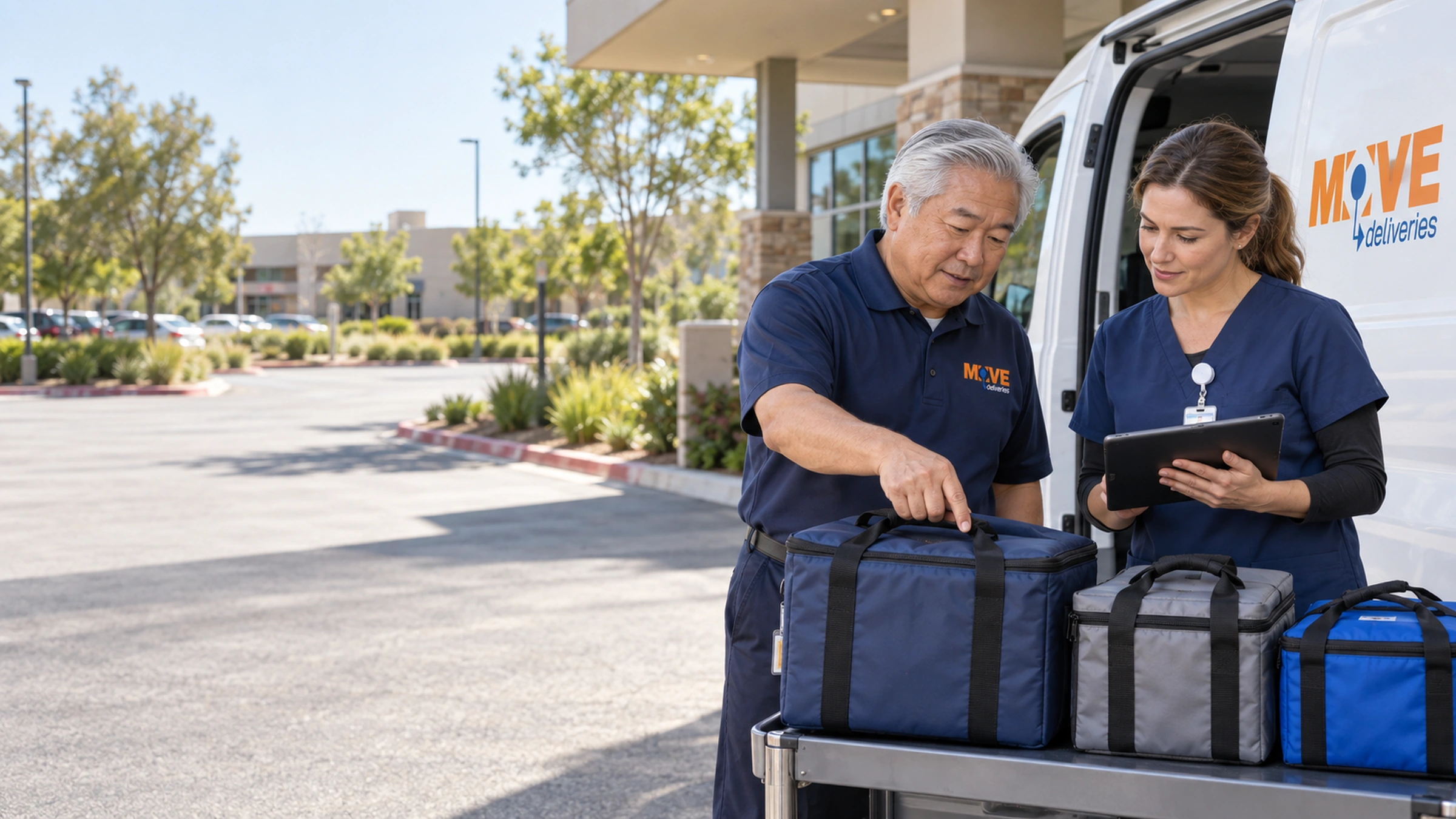
Multi-stop local courier routes
Connect your stops. Simplify the daily coordination.
Fixed-route delivery gives each local stop a place in the plan. Connect healthcare pickups and receiving points in an agreed sequence, with readiness, access and cutoffs clear before the route begins.
Background-checked drivers
Live delivery tracking
Electronic proof of delivery
The order of stops matters
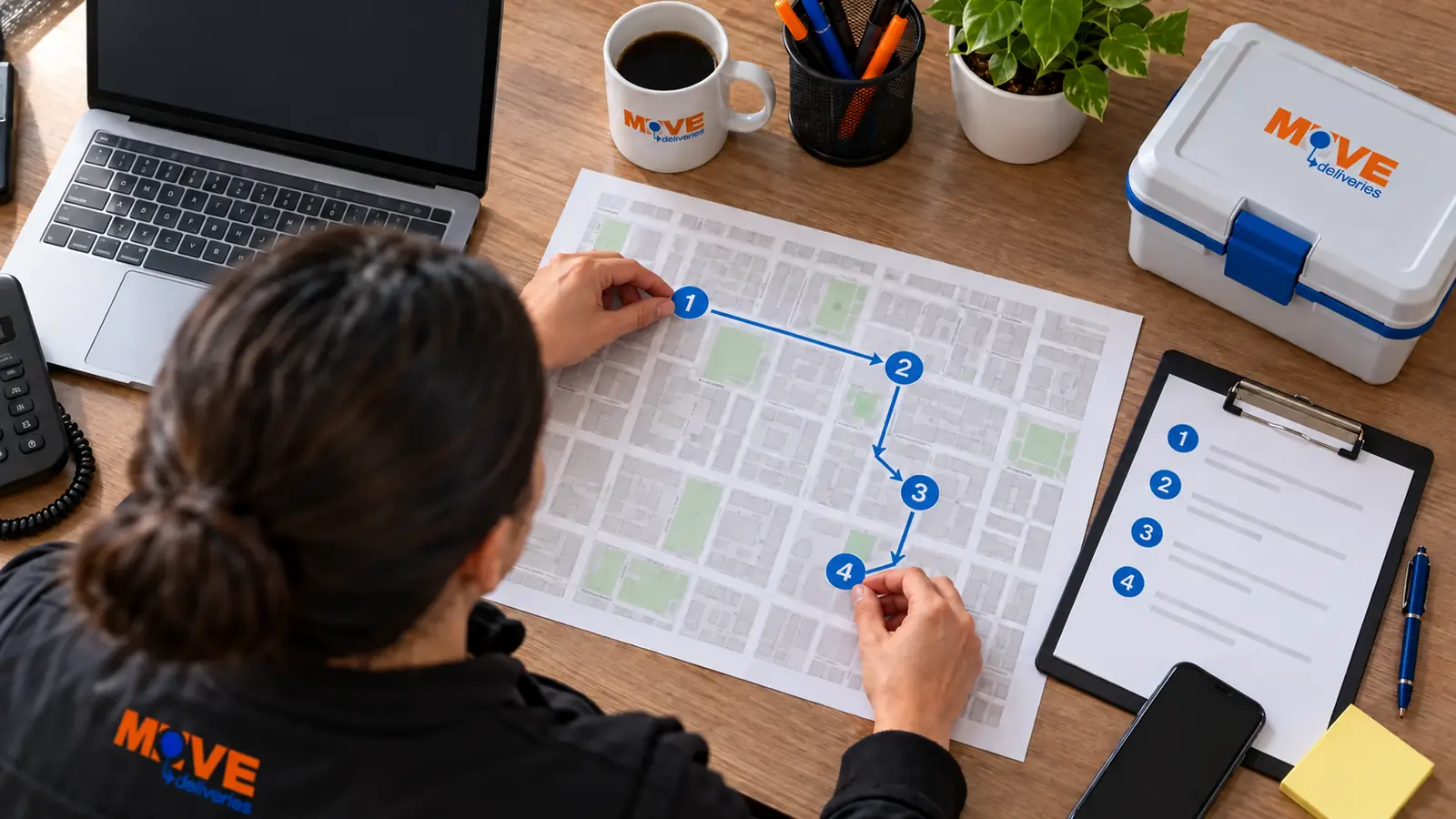
A route is more than a list of addresses.
A nearby stop may not be ready first. A lab may close receiving before a clinic finishes its day. We review the whole local stop list together, so the sequence reflects the work at each location—not just the shortest distance.
Pickup readiness and receiving cutoffs.
Entrances, stop duration and receiving contacts.
Your service plan
One plan for the whole local route.
Confirm the details once. Give your team a clear next step.
Map the stops
Provide every pickup and destination, including access details.
Test the timing
Review ready times, receiving deadlines and expected volume.
Confirm the routine
Agree on the schedule, proof and process for route changes.
Evidence across the route
Keep every collection connected to its destination.
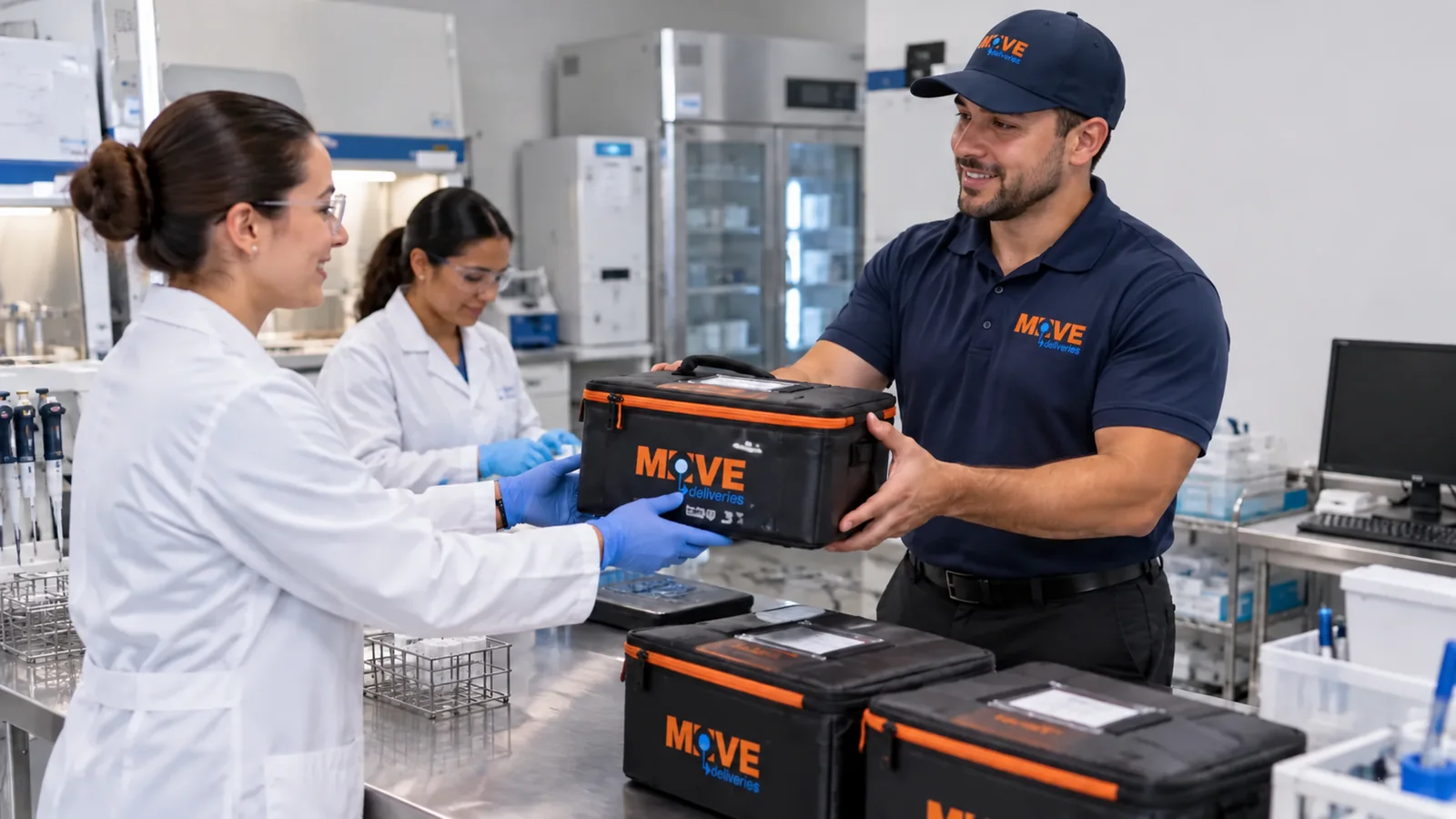
Multiple stops should not create a trail of disconnected updates. Connected delivery records help your team review pickups, progress and completed deliveries, with exceptions raised through the agreed process.
Documented collection and receiving events.
A shared reference for route follow-up.
How it works
One local route. Every stop accounted for.
A nearby address is not necessarily the next ready stop. Build the sequence around the work at each location.
-
Step 1
Map the stops and their cutoffs.
List every local collection and receiving point, ready time, access need and package volume.
-
Step 2
Confirm the sequence together.
Agree on stop order and what happens when a site runs late or asks for an additional pickup.
-
Step 3
Follow progress across the route.
Give coordinators the agreed tracking view and an escalation contact for a missed window or access problem.
-
Step 4
Document receipt at each stop.
Review pickup and receipt records for the relevant stops rather than treating one final status as proof for the whole route.

Before You Choose
Check Your Fixed-Route Delivery Plan Before The First Run.
Which stop would put the rest of your route under pressure if it were not ready?
- Record the package-ready time and receiving cutoff for every local stop.
- Agree on what happens when a collection runs late or an extra stop is requested.
- Give coordinators a reference for each pickup and completed delivery.
Build Your Multi-Stop Route Checklist
Planning reference: CDC specimen packing and shipping guidance. Confirm the requirements for your materials and service.
Questions, answered
Fixed-Route Delivery questions
Can a route collect from several clinics and deliver to one lab?
Yes. That is a common multi-stop use case. Provide the collection sites, ready times, laboratory cutoff and material requirements so the route can be reviewed.
Is a fixed route limited to laboratory work?
No. Local pharmacy pickups, care-site transfers and medical-supply replenishment can also use a planned route. The route must fit the materials and receiving requirements.
Can stops be added or changed?
Changes can be reviewed with the team. An added stop may affect timing, vehicle capacity or pricing, so it needs confirmation rather than being assumed to fit the existing route.
Does this mean deliveries between states?
The service described here connects stops within a local delivery area. MOVE has drivers in markets across the country; this is not a cross-country freight route.
Your Next Three Steps
Give Every Stop A Place In The Plan.
A route should fit the people preparing and receiving the items—not just the order of addresses.
1
Map The Local Stops
Share each pickup and destination, ready time, receiving window and package volume.
2
Review The Route Together
Agree on stop order, handling needs, pricing and the process for late or additional requests.
3
Follow Each Delivery
Use the agreed delivery updates and proof to keep your team informed across the route.
Your request is reviewed before a delivery is confirmed. No payment is taken on this page.
Ready when you are
Bring your local stops into one plan.
Send the stop list, ready times and receiving windows. We’ll review the route together.