
The courier is scheduled. The clinic expects a pickup. The laboratory expects a delivery. But who has confirmed that the shipment can actually leave? A daily lab pickup readiness checklist should answer that question before the van reaches the door—and name the person who acts when the answer changes.
For laboratory managers and clinic operations teams, this is a release-and-communication problem, not another exercise in choosing a time on the calendar. A planned collection is not a ready shipment. A ready shipment is not a confirmed transport arrangement. And a completed courier handoff is not a laboratory decision that the specimens are acceptable.
This guide provides an original pickup-ready protocol, an ownership worksheet and a delay-message template for a local recurring collection. It does not prescribe specimen packaging, storage, stability limits, test eligibility or clinical decisions. Those requirements remain with the responsible laboratory and appropriately qualified staff. Use the protocol alongside their instructions, not instead of them.
In This Guide
- Separate the signals people often combine
- Name the release owner and backup
- Write a shared definition of ready
- Use the pickup-ready ownership worksheet
- Agree on the signal and acknowledgment
- Plan what happens when readiness changes
- Walk through a fictional clinic example
- Review the process without blaming the wrong person
- Ask useful questions before launch
- Give your next collection a clearer starting point
Separate The Signals People Often Combine
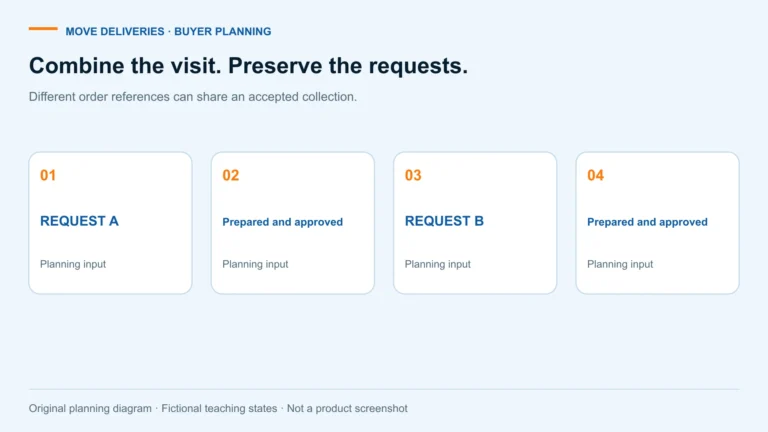
A recurring appointment tells people when a collection is planned. A readiness confirmation tells them that the named shipment is available for the agreed release. Dispatch acknowledgment tells the site that its message reached the appropriate operational contact. These are different facts. Combining them into one vague “all set” leaves staff to fill in the gaps.
Use four plain-language states in your internal planning: planned, ready confirmed, readiness changed and collected. They are suggested worksheet labels, not a claim that MOVE’s software displays these exact statuses. Define who can change each state and which communication records the change. A later update should clearly replace the earlier one rather than leave two conflicting instructions in circulation.
The most useful question is not “Did someone send a message?” It is “Does the person responsible for the next decision have the current instruction?” A receptionist seeing a calendar entry may know where the courier should arrive but have no authority to release a shipment. A coordinator reading a ready message may still need to confirm a route change separately.
Name The Release Owner And A Real Backup
Identify a role at the collection site that can confirm readiness under the laboratory’s procedures. Then identify the person filling that role for the current shift. “Ask anyone at the front desk” is not a release plan if the desk changes staff, closes for lunch or is separated from the prepared shipment.
The backup needs more than a name on a list. They need access to the current pickup instructions, knowledge of the agreed communication channel and a clear boundary around the decisions they can make. Test whether the backup can explain the process without the primary coordinator standing beside them. If they cannot, the plan still depends on one person remembering everything.
Keep responsibilities distinct. Qualified laboratory or clinic staff decide the shipment’s readiness under their procedures. The courier team coordinates the transport arrangement it can accept. The receiving laboratory controls its own intake and acceptance decisions. No party should quietly inherit another party’s authority because a collection is running late.
Write A Shared Definition Of Ready
Ask the responsible laboratory to supply or approve the specimen-specific requirements. Your operational definition can then identify the release location, responsible person, shipment reference, transport-unit count and the instructions already agreed with the courier. Keep the checklist focused on whether an authorized handoff can take place—not on asking the driver to judge clinical suitability.
There is a reason to leave technical decisions with the right people. In the context of field investigations, CDC’s guidance on laboratory collaboration advises consulting the receiving laboratory and shipping experts before sending samples. That context is not a universal courier checklist, but it supports the boundary here: qualified instructions come first; the operational plan communicates them.
For regulatory context, the 2025 published edition of 42 CFR 493.1242 describes applicable laboratory policies for specimen transport and acceptance, and documentation of receipt. This article is not an assessment of current legal obligations or CLIA compliance. Have your laboratory’s qualified reviewer confirm the current requirements that apply to its work.
Readiness also has a version. If the unit count, collection point or release contact changes after confirmation, the original instruction may no longer describe the shipment. Agree on what requires a fresh confirmation. Do not let a casual “we added one more” message become an unreviewed change to vehicle fit, handling scope or receiving instructions.
Lab Pickup Readiness: An Ownership Worksheet
Complete one row for the actual pickup location, even when several clinics share a contract. The table below is an original planning tool. Put role names and approved channels in your internal copy; do not publish personal phone numbers, patient references or access codes. Review it with the site, receiving laboratory and courier coordinator before using it.
| Decision Or Event | Owner To Name | Evidence Or Instruction To Agree |
|---|---|---|
| Confirm the shipment is ready | Authorized clinic or laboratory release role | Current shipment reference, release point, unit count and confirmation time |
| Cover an absent release owner | Trained site backup | Shift coverage, permitted decisions and access to current instructions |
| Acknowledge the ready message | Agreed courier coordination contact | Approved channel and what acknowledgment does—and does not—confirm |
| Withdraw or correct readiness | Site release owner or authorized backup | Which prior message is superseded, current state and next decision owner |
| Choose a transport response | Courier coordinator within the agreed arrangement | Explicit acceptance of waiting, reordering, another collection or other proposed work |
| Resolve specimen or receiving questions | Responsible laboratory contact | Laboratory decision communicated through its approved process |
| Record the physical handoff | Agreed releasing and collecting roles | Actual collection event, transport-unit count and agreed custody record |
Add a review date and one maintained location for the worksheet. That makes it easier to retire an old instruction after a staffing change. A perfect document stored where nobody can find it is less useful than a short, current instruction the next shift can explain.
Agree On The Signal And The Acknowledgment
Choose the approved channel with the courier team during setup. Do not assume there is a specific portal button, automated readiness trigger or integration unless it has been demonstrated and confirmed for your arrangement. A usable process can be simple, provided everyone knows where the instruction goes and who checks it.
Your ready message can identify the pickup reference, current operational state, release location, transport-unit count and responsible role. Agree on how the recipient acknowledges it. Distinguish “message received” from “new pickup accepted.” Acknowledgment should not accidentally authorize additional stops, waiting time or a changed destination.
Decide what happens if acknowledgment is missing. Name the approved backup contact and the person who follows up. Do not invent a universal response time or keep escalating through unrelated people until someone says yes. The escalation interval and any service implications belong in the confirmed arrangement between the organizations.
Keep operational updates separate from unnecessary clinical detail. HHS’s minimum-necessary guidance describes limiting unnecessary protected-health-information access and disclosure, with important exceptions including certain treatment disclosures. Your privacy reviewer should decide what applies. A public quote form or informal group message is not the place to paste patient records simply to explain a pickup delay.

Plan What Happens When Readiness Changes
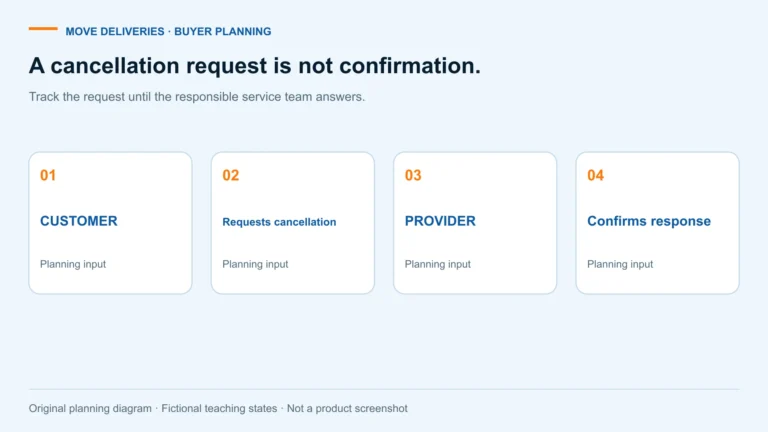
A useful exception playbook separates the fact from the requested response. “The shipment is not ready” is a fact reported by the site. “Please wait,” “collect another stop first” or “return later” is a proposed transport response that needs the appropriate decision and confirmation. Neither an ETA nor silence supplies that authority.
Use this message structure: pickup reference; previous readiness instruction being replaced; current operational state; known release information; decision needed; authorized owner; and the next agreed update point. Do not promise a revised release time if the responsible site cannot support it. “Not yet confirmed” is more useful than a confident guess that will need another correction.
Fictional message: “Pickup reference DEMO-ONLY. The earlier ready confirmation is withdrawn. The site release owner says preparation is not complete; a revised ready time is not confirmed. Please contact the agreed coordinator to review the collection plan. The site owner will provide the next update at the checkpoint we agree.”
If the courier has arrived, make the handoff state equally clear: collected, not collected or awaiting an authorized decision. Do not write “picked up” to mean that the van reached the property. Have the responsible people confirm whether waiting, another attempt or a changed sequence is acceptable. Extra work and receiving implications should be reviewed rather than assumed.
If a shipment has already been collected and a new issue arises, do not repurpose the readiness checklist into a clinical decision rule. Contact the responsible laboratory and courier coordinator through the agreed escalation process. Any change in destination, return instruction or receiving arrangement needs the appropriate authorization.
Walk Through A Fictional Clinic Example
Imagine a fictional clinic with a recurring local collection. Its planning worksheet names a release owner and backup, a receiving laboratory contact and a courier coordination contact. A morning appointment appears on the schedule. That entry creates the planned state; it does not declare the shipment ready.
After the site’s authorized preparation checks are complete, the release owner sends the agreed readiness message for one transport unit. The coordinator acknowledges receipt within the arrangement’s process. The clinic retains responsibility for the accuracy of the readiness instruction. No patient information is included in this illustrative operational message.
Before collection, the site discovers that the previously confirmed shipment has changed. The owner explicitly withdraws the first instruction and reports the new state. The courier coordinator reviews the transport implications, while the laboratory contact answers any specimen-specific or receiving questions. A proposed revised collection is not treated as accepted until the relevant parties confirm it.
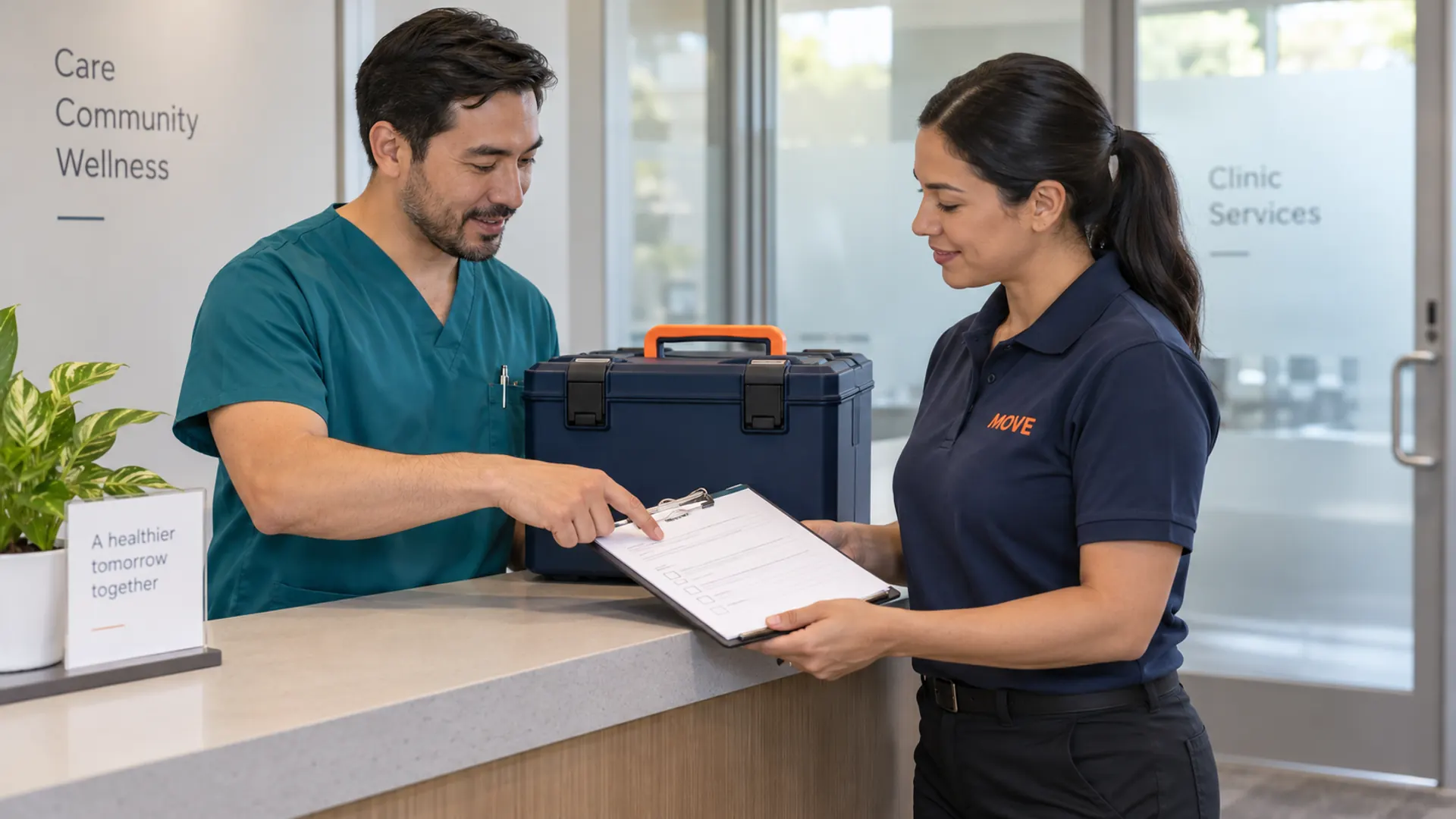
At the eventual authorized handoff, the parties record the actual collection event and agreed unit count. The receiving laboratory subsequently follows its own receipt and acceptance procedures. The example demonstrates who communicates and decides; it is not a MOVE case study, a guaranteed workflow outcome or a specimen transport-time recommendation.
Review The Process Without Blaming The Wrong Person
Review a small set of actual collections with the people responsible for each stage. Was readiness confirmed? Did acknowledgment reach the site? Was an instruction withdrawn? Was the courier present but the shipment unavailable? Which decision was waiting on a named owner? These questions describe the process more accurately than one unexplained “late pickup” label.
If you calculate a readiness measure, define the denominator first. For example, compare confirmed-ready events against the scheduled collections included in that review, and state how cancellations, changed schedules and missing records are handled. Missing information is unknown, not proof of an on-time event or a failure. This is a suggested review method, not a MOVE performance statistic.
Separate recurring causes from individual exceptions. A staff coverage gap needs a different response from an inaccessible release point or a message sent to an obsolete contact. Agree on a practical change, assign an owner and check whether the next shift understands it. Do not alter laboratory instructions simply because the transport schedule would be easier.
Use MOVE’s proprietary platform for the visibility actually available in your configured service. Tracking can help explain progress after a collection, but it should not be assumed to certify shipment readiness or laboratory acceptance. Review the relevant access and support process with the team before relying on a particular feature.
Ask Useful Questions Before The Route Goes Live
- Who can confirm and withdraw readiness at this specific pickup point?
- Who covers that role during shift changes or absence?
- Which channel carries the current instruction, and how is it acknowledged?
- What happens when the courier arrives but collection cannot take place?
- Who authorizes changed work, and who contacts the receiving laboratory?
- Which records distinguish a planned appointment, actual collection and laboratory receipt?
Keep the surrounding decisions in their own guides. Use receiving-cutoff planning to work backward from the laboratory’s confirmed window. Use the first-week pickup checklist for the broader launch. This readiness protocol gives those plans a clear release signal and exception owner; it does not replace them.
Daily Lab Pickup Readiness Questions
Does A Recurring Booking Mean The Shipment Is Ready?
No. A booking is a transport-planning event. The site’s authorized person should confirm readiness through the agreed process, using the laboratory’s applicable instructions. Discuss any changes with the courier team rather than expecting a calendar entry to answer the release question.
Can The Courier Decide Whether A Specimen Is Suitable?
This checklist assigns no clinical decision authority to the driver. Specimen-specific requirements and acceptance decisions remain with qualified personnel under the laboratory’s procedures. A collection record documents an operational handoff; it is not a clinical suitability assessment.
Should We Assume A Ready Message Changes The Route?
No. The message communicates the site’s current state. Changed timing, waiting, additional stops or another collection need separate review and explicit confirmation under the agreed transport arrangement. Ask what acknowledgment means before treating it as acceptance of new work.
Give Your Next Collection A Clearer Starting Point
Bring MOVE the operational scope: local pickup and destination, collection pattern, transport-unit count, release role, receiving window and the questions your team needs answered. Do not include patient records in a public inquiry. Confirm route availability and any special handling requirements separately; nationwide driver presence is not a promise that every route or shipment is supported.
Explore laboratory delivery support and scheduled local delivery to discuss a recurring arrangement. For a single point-to-point order, use Quick Quote. For ongoing pickups, Start An Account begins the conversation about a maintained plan, appropriate visibility and accountable handoffs.