
A laboratory does not need a moving dot simply because moving dots look impressive. It needs information that helps staff prepare for a collection, understand a timing change and identify what still needs attention. The most useful courier tracking starts with those decisions, not with a feature list.
For local specimen transport, the operational question changes during the journey. Before pickup, staff need to know whether the collection is arranged and the package is ready. During transit, a receiving coordinator may need an arrival estimate. After handoff, the team needs the relevant completion record. Those events should be clear enough that employees do not have to guess what a status means.
This guide helps laboratory managers define tracking needs before selecting or setting up a courier service. It includes a status-to-action worksheet and a practical reporting test. It addresses transport coordination, not clinical specimen suitability, stability limits or material-specific handling requirements, which qualified laboratory personnel must determine.
Begin With The Decisions Your Team Makes
Ask the collection site and receiving laboratory what they do with a delivery update. Does an arrival estimate help organize intake? Does a changed pickup time require a contact with the releasing site? Does an unresolved handoff need a decision from the operations owner? If no action or useful awareness follows an update, it may simply add noise.
Identify the intended user for each decision. A technician preparing the package, a receiving coordinator and a procurement manager do not need identical views. Giving everyone every notification can obscure the one event that requires attention. Start with roles, decisions and appropriate access before choosing how many updates to send.
For the wider transport plan, explore laboratory delivery solutions. Tracking should fit the confirmed collection arrangement, including readiness and receiving windows. Technology cannot make an unready package available or turn a closed receiving desk into an accepted handoff.
Separate A Request From A Confirmed Pickup
A submitted inquiry, an accepted arrangement and a completed collection are different events. Ask the provider how these distinctions appear to your team. Staff should not tell the laboratory that a shipment is moving simply because someone submitted a form or received a preliminary estimate.
Confirm the process for scheduled requests as well as urgent ones. A recurring collection plan may have a maintained schedule, while an extra request needs separate review. The status should make the relevant arrangement understandable without implying that every additional package or destination is automatically included.
Use a consistent request reference from preparation through handoff. This helps staff find the right record without adding unnecessary patient details. The courier request worksheet can help define the operational information needed at the beginning.
Understand What An In-Transit Status Establishes
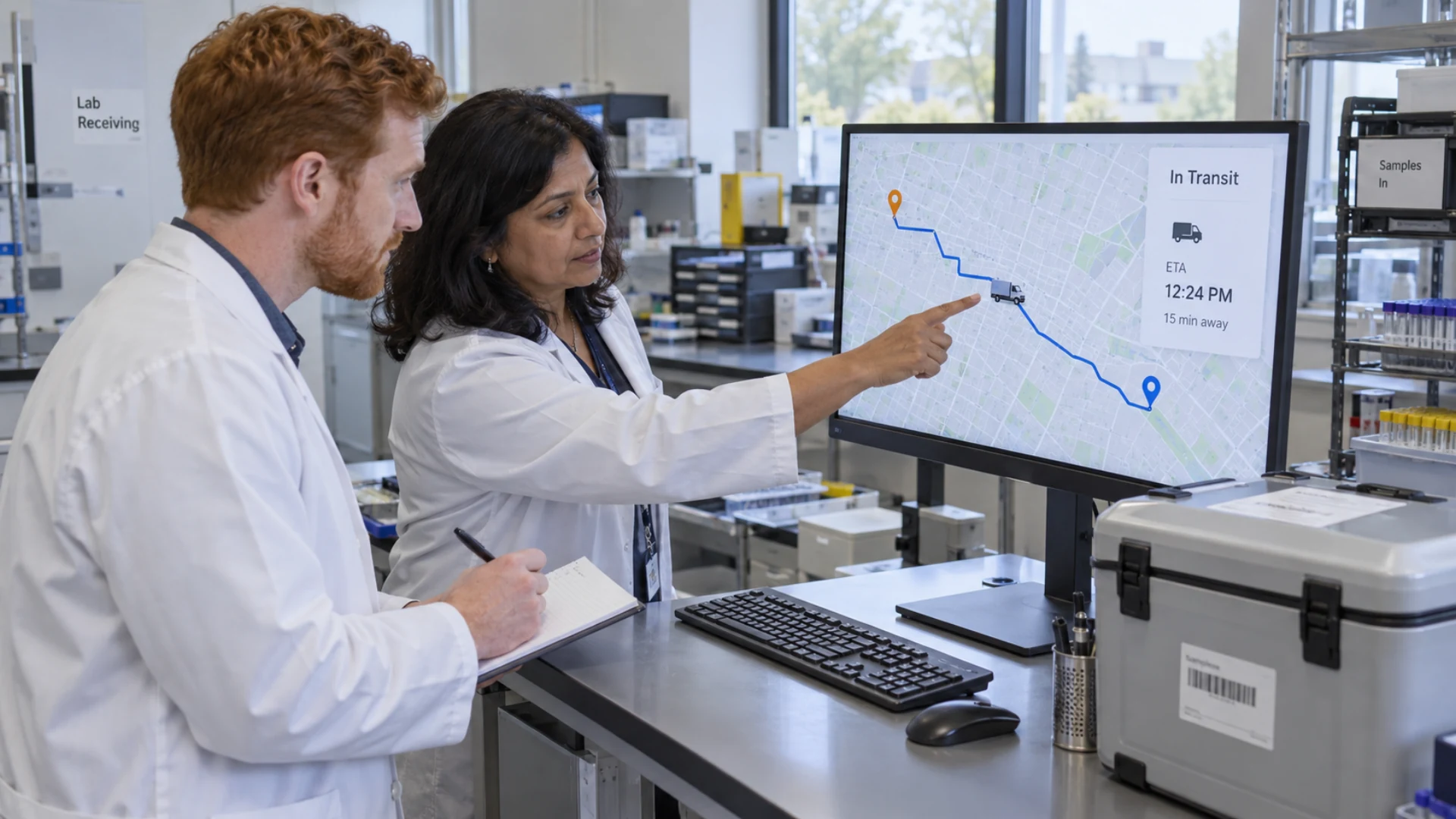
An in-transit status is an operational description of the journey. Ask which event triggers it and how it relates to collection confirmation. A map location, a driver assignment and a recorded pickup may not occur at the same moment. Clear definitions prevent staff from combining them into an unsupported conclusion.
For a local journey, the map should show the relevant city-level route and the pickup and receiving locations. It should not suggest interstate movement when the service is local. The view is useful when it helps the coordinator orient the request, not when it creates a dramatic national network picture unrelated to the work.
Confirm what your team can see through live tracking for the proposed arrangement. Do not assume every location field, update interval or notification option is available. Ask how a delayed or missing update is distinguished from a delivery exception requiring a response.
Treat The ETA As An Estimate With A Purpose
An estimated arrival time helps a receiving team prepare. It is not proof of acceptance and should not silently become a guaranteed delivery deadline. Review the service’s confirmed window separately from the changing estimate shown during the journey.
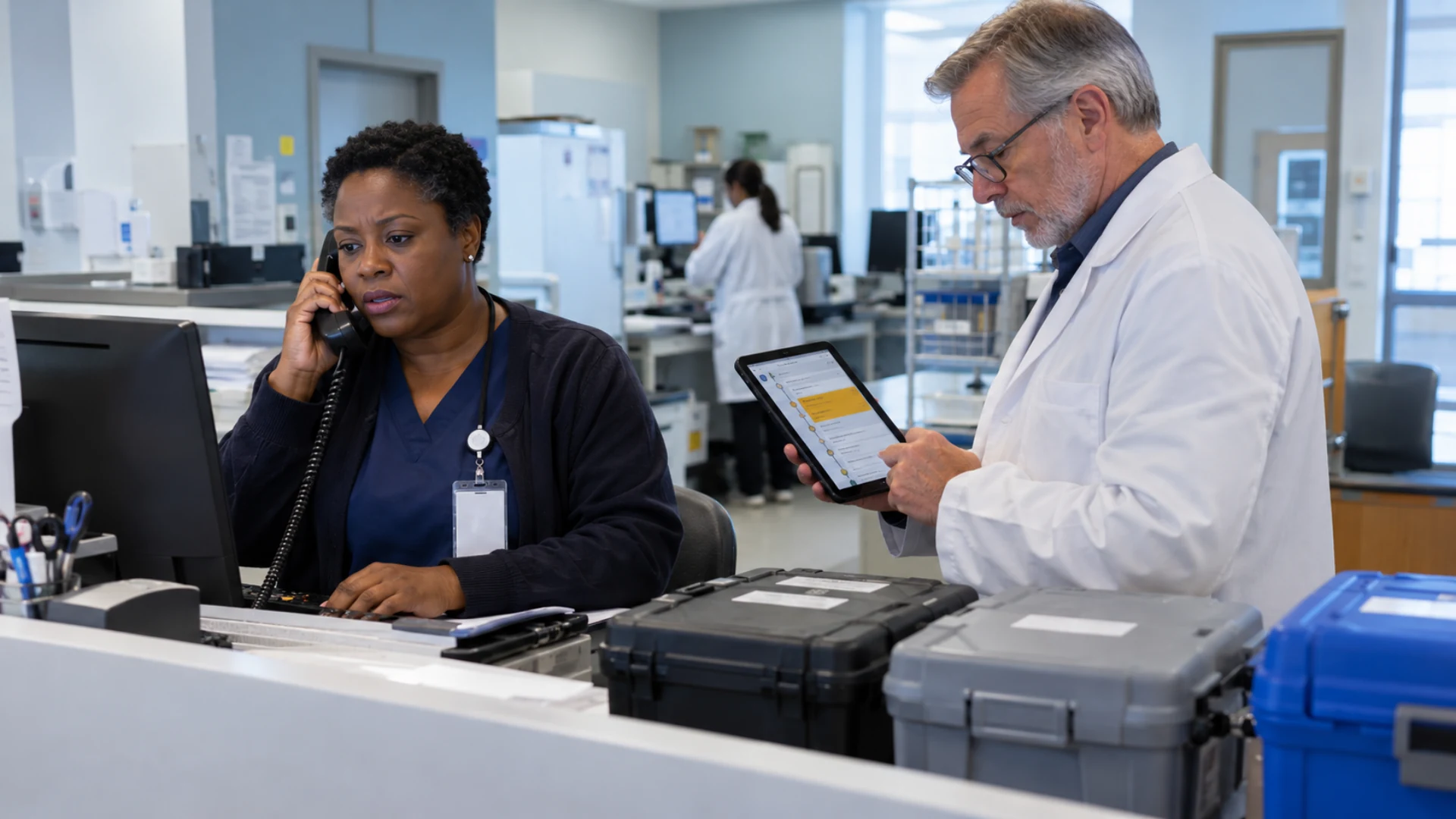
Ask what the team should do if the estimate approaches or passes the receiving requirement. Identify who contacts the service coordinator and who can decide on an operational change. An update that reveals a problem without identifying a decision owner can leave several employees watching the same screen while no one responds.
Keep the laboratory’s material-specific requirements separate from a general ETA. A transport estimate does not determine whether a specimen remains suitable for testing. Qualified personnel must make that judgment under the laboratory’s procedures. The tracking record provides operational context, not a clinical acceptance decision.
Build A Status-To-Action Worksheet
Use the following worksheet during setup. The event names are planning descriptions; confirm the actual labels and definitions in the proposed platform. Keep the actions proportionate. Not every routine update needs a telephone call, but each material exception should have a clear owner.
| Event To Understand | Laboratory Question | Useful Response |
|---|---|---|
| Request Submitted | Has the service been confirmed? | Check the acceptance process before promising a window |
| Pickup Confirmed | Was the intended package collected? | Match the request reference and release record |
| In Transit | What arrival estimate is relevant? | Inform the named receiving coordinator as appropriate |
| Timing Change | Does the receiving requirement need attention? | Use the agreed escalation contact |
| Handoff Recorded | Can the laboratory retrieve the completion evidence? | Review the relevant record and receiver process |
| Exception Unresolved | Who can approve the next action? | Contact the named decision owner, not an undefined group |
Add the expected information source beside each event. A phone conversation, a platform status and a report may each answer a different question. The worksheet should show how the team resolves uncertainty rather than assuming one screen contains every fact.
Connect Tracking With Readiness And Receiving Cutoffs
Tracking becomes more useful when the collection plan already contains realistic readiness and receiving requirements. Without those references, an ETA may look acceptable even though it does not fit the laboratory’s operating window. The platform should support a plan your team has defined, not create the plan after collection.
Use the receiving-cutoff planning guide to work backward from the laboratory’s requirement. Compare the proposed pickup with the collection site’s release process and local access. Do not compress those steps simply because the map shows a short drive.
If readiness changes, use the agreed process to review the effect on the destination. A later release can require a new coordination decision. Staff should not continue quoting the original estimate when its assumptions no longer match the request.
Review Visibility For Multi-Stop Collections
A local collection route introduces several handoffs before the final receiving event. Ask how the team identifies the relevant stop, collection reference and route-level progress. A single vehicle marker may not answer whether a particular site’s package was collected.
Identify which coordinator watches the sequence and who can approve a change when a stop is not ready. The route may need a revised order or a separately reviewed exception. Do not assume that a tracking view gives every employee authority to alter the operating plan.
Review fixed-route delivery and the laboratory route-fit guide alongside the technology conversation. The stops, readiness and receiving window define the route; the visibility helps staff understand it.
Distinguish Transport Completion From Laboratory Acceptance
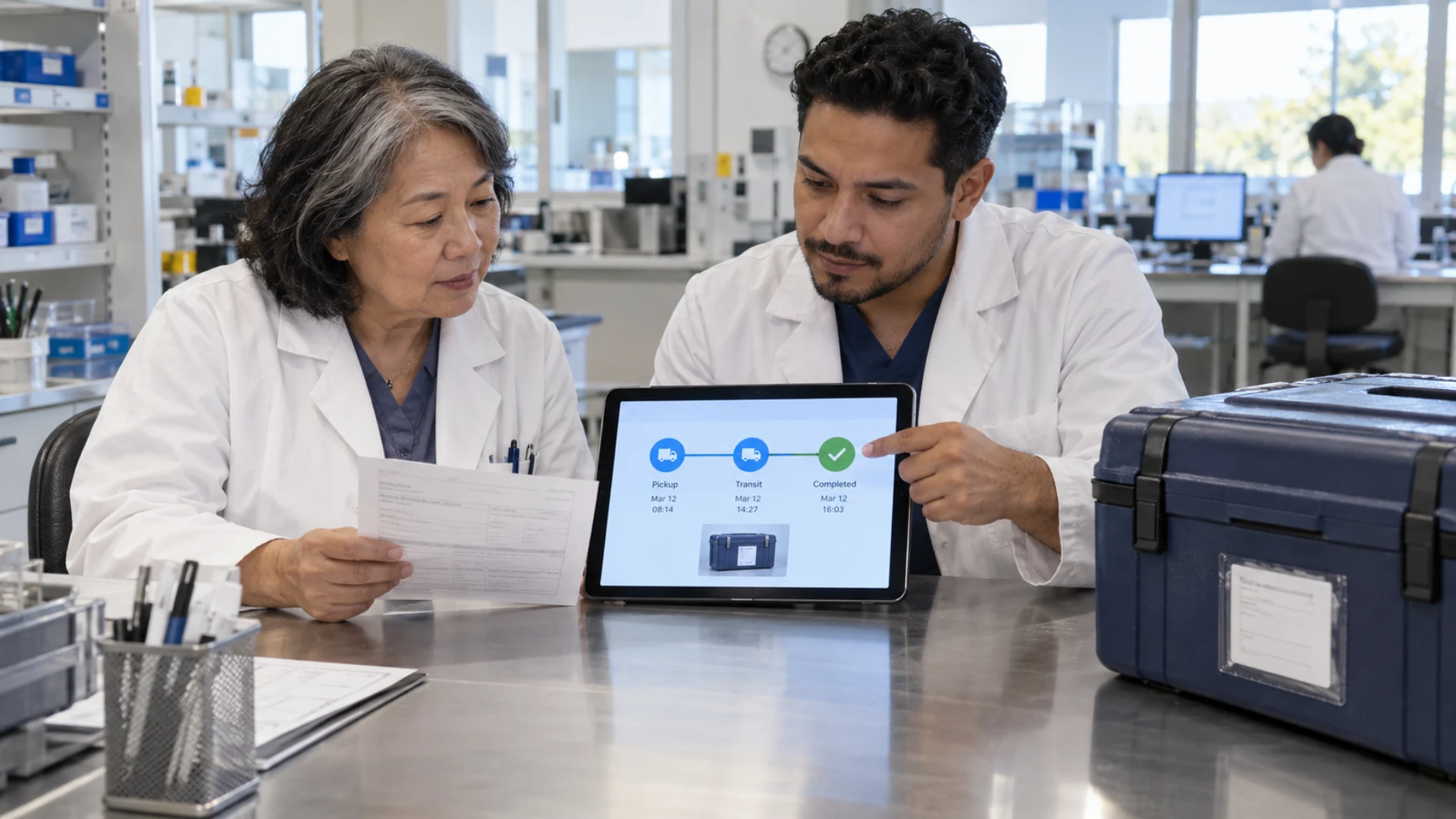
A courier completion event records the transport handoff under the agreed process. The laboratory may have separate intake, inspection or acceptance responsibilities. Keep those stages distinct so staff do not infer that every internal receiving step has been completed from a courier status alone.
Confirm the relevant proof-of-delivery fields and how an authorized user retrieves the record. Ask what the record can establish and what remains outside its scope. A signature or timestamp has a defined operational meaning; it should not be stretched into a clinical conclusion.
When a handoff question arises, start with the request reference and the specific question. Was the package collected? At which receiving point was the handoff recorded? Which status remains unresolved? A focused review is easier than asking the system to prove everything about the shipment at once.
Test The View With A Laboratory Employee
Ask the intended user to find a representative request and explain its current status. Can they identify whether pickup was confirmed, whether timing needs attention and where the completion record belongs? This test reveals whether the view is understandable to the person who must use it.
Use a planned scenario with no unnecessary sensitive information. A walkthrough is not evidence of future delivery performance, but it can reveal confusing labels, missing references or an unclear next action. Record those questions before setup is treated as complete.
Include one exception in the walkthrough. Ask what the employee would do if the estimate changes or the receiver is unavailable. A platform demonstration that covers only a smooth journey may leave the most important coordination question unanswered.
Test retrieval after the handoff as well as visibility during transit. The receiving coordinator may use a live view today and a different report tomorrow. Confirm how the request reference carries between those views and who can request clarification if the information appears inconsistent.
Keep Information And Access Controlled
Define the operational fields each role needs, and review access through your organization’s appropriate process. Do not assume everyone who sees a delivery update should receive every related detail. Avoid placing patient identifiers, clinical content or private contact data into broadly shared status messages.
If the laboratory wants updates in another system, discuss software integration as a scoped workflow. Identify the source event, destination, relevant fields and response handling. A tracking feature does not automatically establish that every report or file can be transferred into a laboratory system.
Review access when roles change. A former coordinator’s permissions and a new employee’s responsibilities should not depend on an old email chain. Useful visibility includes clear ownership of who may see the information and who maintains the operating instructions.
Maintain Local Planning As The Work Changes
Review the tracking workflow when the laboratory adds a collection site, changes receiving hours or introduces a different package profile. The original notifications may no longer support the decisions staff need. A route-level update that was sufficient for two sites may need another discussion for a more complex sequence.
Confirm address-level coverage through the Washington, California or relevant state page. The map helps start a local service discussion; it is not a live acceptance of every collection request in the state.
Keep a short change history explaining the updated window, contact or status-action instruction. Staff can then understand the current workflow without relying on someone who remembers every earlier exception. Technology is most useful when the surrounding operational plan stays current.
Why MOVE Fits A Laboratory Tracking Conversation
MOVE combines local same-day delivery coordination with a proprietary platform for visibility and electronic proof of delivery. We start with the laboratory’s collection and receiving workflow, then discuss the service and information your team needs to follow it.
That approach connects technology with human responsibility. The map helps orient the journey; the coordinator handles the relevant operating questions; the completion record supports the handoff review. None replaces the laboratory’s material-specific procedures or professional acceptance responsibilities.
Bring your local collection request to Quick Quote, or Start An Account for recurring needs. Include readiness, receiving requirements and the roles that need updates so MOVE can review the arrangement and local availability.
Laboratory Tracking Questions
Is An ETA A Guaranteed Receiving Time?
No. Treat it as an estimate unless the agreed service terms establish something different. Review the confirmed window and the laboratory’s receiving requirement separately, and identify who responds to a material timing change.
Does A Map Marker Confirm A Specimen Was Collected?
Not by itself. Confirm the relevant pickup event and request reference. Location information and collection evidence answer different operational questions.
Does Courier Completion Prove Clinical Suitability?
No. It records the transport handoff under the agreed process. Qualified laboratory personnel remain responsible for the laboratory’s material-specific and acceptance decisions.
What Should We Ask To See In A Demonstration?
Ask an intended user to locate a request, explain its status, identify the next action for an exception and retrieve the completion record. A relevant workflow is more useful than a tour of every platform feature.
Make Courier Updates Useful To Your Laboratory
Tell MOVE which decisions your team needs to make during the local journey. We can review a delivery and visibility plan around those needs.
Quick QuoteStart An Account