
Your delivery needs to move today. But before anyone can give you a useful price, somebody has to answer the questions that make the job possible: where is the package, when will it be ready, who can receive it, and what happens if the handoff cannot be completed?
A good medical courier quote request does more than collect a rate. It gives your team and the delivery provider a shared picture of the work. That means fewer assumptions to untangle after a driver has been assigned. Use this guide to prepare a clear request for local delivery, whether you manage a pharmacy, laboratory, hospital department or medical supply business.

Start With The Outcome Your Team Needs
Start with the operational result, not simply “ASAP.” Does the package need to arrive before a laboratory receiving cutoff? Is a patient expecting a delivery during an agreed window? Will a department close before an equipment shipment arrives? The reason for the deadline helps the provider understand which part of the schedule has flexibility and which part does not.
Describe the deadline in plain language. “Ready after 10:30 a.m.; receiving team accepts deliveries until 2 p.m.” is more useful than “urgent morning delivery.” Include the date and time zone when people in different offices are arranging the work. If the pickup time is uncertain, say so. A tentative ready time should not quietly become a commitment that the releasing team cannot meet.
Ask your own team a practical question: if this delivery arrived later than expected, what decision would someone need to make? That answer may reveal a backup recipient, a revised receiving arrangement or the need for a different service. You do not need to submit sensitive clinical details to explain an operational deadline. A clear receiving requirement is usually a better starting point.
Identify Both Locations, Not Just Two ZIP Codes
A ZIP code helps locate an area; it does not tell a courier how to complete a handoff. Prepare the full pickup and delivery addresses, including the business or facility name. Confirm that each address describes the actual receiving point rather than a billing office, corporate headquarters or public entrance that does not accept deliveries.
For a hospital campus, identify the building, department and approved entrance. For a pharmacy, distinguish the dispensing counter from a separate receiving door. For a supplier, identify the warehouse release point. A familiar address can still be ambiguous when a site has several entrances or buildings with different receiving rules.
Keep suite or unit information separate from the main street address so it can be checked without changing the location. Include access constraints that affect the job, such as a security desk or a scheduled loading area. Do not include access codes in a public inquiry if your organization has a more secure way to share them. The goal is to establish the route and identify any follow-up instructions before dispatch, not to expose every operational detail in a public form.
Describe The Shipment In Operational Terms
Record the number of packages and the total estimated weight. State whether the pieces are ready for transport together or will be released in separate batches. Three sealed bags at one release point describe a different job from three packages that must be collected from different departments.
Dimensions are helpful when size could affect vehicle fit, but you do not need to turn every small parcel into a measuring exercise. For bulky equipment, provide the outer packaged size, orientation restrictions supplied by the manufacturer, and any known assistance needs. If you do not have an exact measurement yet, flag that information for confirmation rather than making up a number.
Use a general shipment description appropriate for an initial business inquiry: prepared pharmacy packages, sealed laboratory transport containers, medical supplies or packaged equipment. Your qualified staff remain responsible for determining applicable shipment requirements. Do not assume that all medical items use the same packaging, temperature controls or handling procedure. Tell the provider which requirements need review, and agree on the scope before the shipment is accepted.
Separate Ready Time From Required Arrival
The pickup ready time is the moment your team expects to release the shipment. The delivery deadline is the point by which the destination needs to receive it. Confusing those two times creates a schedule that looks workable in a form but does not match the operation.
For example, a package that must arrive by noon cannot be treated as available for a noon pickup. Work backward from the receiving requirement and allow for release, travel and the destination handoff. Those intervals depend on the actual route and conditions; a map estimate alone should not be used to promise a medical delivery deadline.
If you are considering STAT delivery, ask when the selected window starts and what the team will confirm before scheduling. Two-hour and four-hour options should be evaluated against the pickup plan, not merely the time you opened the quote page. For a recurring need, explore scheduled delivery instead of labeling every predictable pickup urgent. The right service starts with a schedule both ends can support.
Give The Recipient A Plan, Not A Surprise
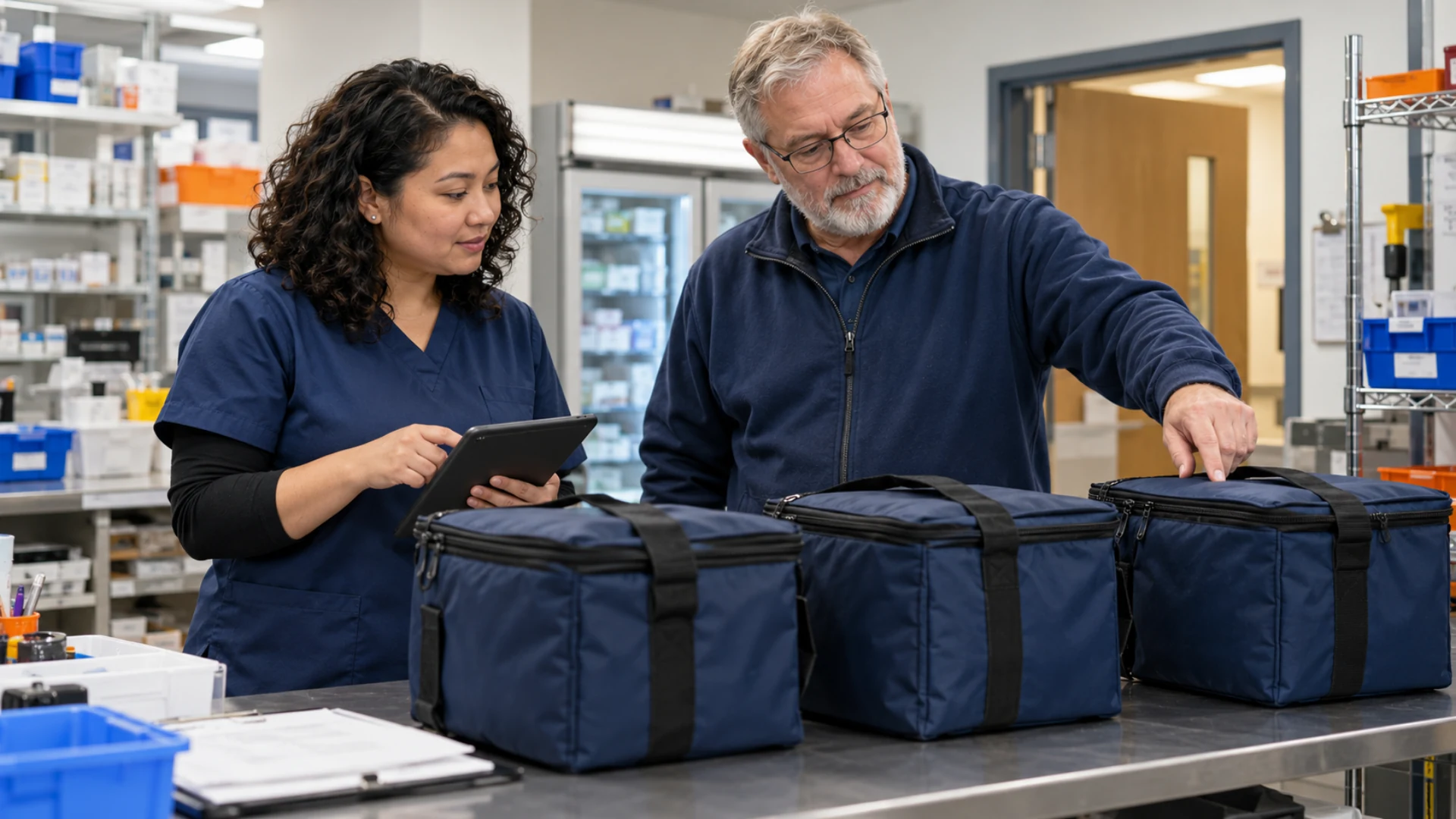
Receiving instructions often make the difference between arriving at an address and completing a delivery. Identify the receiving department or authorized person, the hours during which they can accept the shipment, and the business contact who can resolve a question.
Check whether the destination needs advance notice. A supplier customer may want a call before arrival. A care facility may direct deliveries to a receiving desk rather than a patient area. A laboratory may have a different process after its normal receiving window. Record the approved arrangement instead of assuming that a person at the main entrance can accept everything.
Agree on the fallback before pickup: whom should the team contact if the recipient cannot be reached, and who can authorize a change? A delivery driver should not have to guess whether an unattended drop is acceptable. If the release or receiving rules are not yet settled, include that as an open item in the request. Clear instructions protect the handoff without turning the driver into the decision maker for your organization.
Choose A Service Model That Matches The Work
One urgent local delivery, a daily pickup, a repeating sequence of stops and a dedicated workload are four different planning problems. Requesting the right model helps the provider evaluate capacity and pricing against the work you actually need.
- STAT delivery fits a time-sensitive local request that needs a confirmed pickup and receiving plan.
- Scheduled delivery fits recurring pickups aligned to preparation times and receiving hours.
- Fixed-route delivery connects several local stops through an agreed sequence.
- Dedicated courier service is worth discussing when your workload needs planned courier coverage.
You do not have to solve the service design alone. Share a representative day, explain the urgent exceptions, and ask which arrangement fits best. If demand varies, distinguish normal volume from peak volume. A provider can review a clear pattern more usefully than a monthly total that hides busy afternoons and quiet mornings.
Use This Medical Courier Quote Request Worksheet
Copy these fields into your internal preparation notes. Keep the public request concise, and share additional operational instructions through the agreed channel when the team follows up.
| Field | What To Prepare | Why It Matters |
|---|---|---|
| Shipment | Package count, total weight, general description and any fit constraints | Helps confirm the work and vehicle needs |
| Pickup | Full address, facility, release point, date and ready time | Establishes when and where the job starts |
| Delivery | Full address, receiving point, deadline and authorized recipient arrangement | Defines the intended handoff |
| Frequency | One-time request or recurring days, with typical and peak volume | Helps select the service model |
| Exceptions | Primary contact, backup contact and who may authorize changes | Prevents avoidable decision delays |
| Proof | Completion information your team needs to reference | Aligns expectations before delivery |
After completing the worksheet, have someone at each end check the details. A two-minute receiving check can uncover an incorrect department name or a closed entrance before it becomes a delivery exception. Save the confirmed version so future requests do not rely on somebody remembering last month’s arrangement.
Compare Quote Assumptions Before Comparing Totals
A lower total is not automatically the better proposal. Two quotes may describe different pickup windows, waiting allowances, vehicle assumptions or return arrangements. Ask what the quoted amount includes and which changes could require a revised price.
Useful questions include: is the price based on the full addresses supplied? Is this a direct local delivery or part of an agreed route? What happens if the shipment is not ready? How are additional stops, changed destinations or a return handled? Do not treat an unanswered question as an included service.
Record the provider’s confirmation beside the original request. If your team changes the package count, timing or location, send the revised information before scheduling. A quote should help both parties make a clear decision, not become a document that everyone interprets differently. Where an online price is not available, request a reviewed quote rather than estimating a MOVE rate from another provider’s pricing model.

Keep Patient Information Out Of The Public Inquiry
An initial quote request should describe the business need without unnecessary patient names, prescription details, diagnoses or photographs of medical records. Business contact details and operational timing are different from clinical information. Keep that distinction clear when several staff members help prepare the request.
HHS explains the minimum necessary principle, including situations where it applies and exceptions. Your organization’s privacy team should determine the rules for its actual workflow. This article does not determine whether a particular courier relationship requires a business associate agreement or which disclosures are permissible.
If the delivery requires information that should not be sent through a public form, identify that need without uploading the information itself. Ask how the approved details will be exchanged and who will have access. Similarly, confirm the scope of delivery photographs and completion records before making them part of the handoff. Good preparation includes deciding what not to share, not only gathering more fields.
Confirm Local Availability For The Actual Route
MOVE Deliveries supports local same-day delivery with drivers in markets across the country. That is not an offer to move a package across state lines or a promise that every address is available at every hour. The meaningful coverage question is whether the specific pickup, destination, timing and shipment can be supported.
Use the service-area map as a starting point, then provide both addresses for review. If your organization operates in California, you can begin with California delivery options. For a separate Texas operation, review Texas local delivery options and submit that local route separately. Nationwide presence does not turn those two facilities into one interstate service.
For multi-site businesses, prepare a small set of representative local routes rather than one broad coverage statement. Identify which sites need regular pickups and which need occasional support. That creates a clearer conversation about availability, receiving requirements and the service arrangement for each market.
Why MOVE Deliveries Is A Practical Choice
The right delivery partner should make the work easier to understand before pickup and easier to verify afterward. MOVE combines local delivery services with tracking and electronic completion records, so the conversation can cover the physical handoff and the information your team needs around it.
For pharmacy teams, that means discussing recipient instructions and repeat delivery needs. For laboratories, it means reviewing collection readiness and receiving windows. Hospitals and clinics can outline department access and internal responsibilities; medical suppliers can address packaged equipment, customer receiving arrangements and vehicle fit.
MOVE’s live tracking and electronic proof of delivery give you capabilities to discuss alongside the service. Ask the team to show how they apply to your proposed workflow. A suitable choice is one that matches your requirements with a confirmed plan—not one that asks you to accept a broad promise without looking at the details.
Questions To Answer Before You Submit
Can I Request A Quote Before Every Detail Is Final?
Yes. Separate confirmed details from open items. Provide the addresses, likely package count and timing you know, then identify anything that requires review. A tentative quote request is not the same as a confirmed pickup; the team still needs to verify the final arrangement.
Do I Need Package Dimensions For Every Request?
Dimensions are useful when size or orientation affects fit. The Quick Quote form does not require them for every shipment. If you are moving bulky equipment or an unusual package, share the available information and confirm vehicle suitability before scheduling.
Can A Quote Request Reserve A Driver?
Do not assume that submitting a request reserves capacity. A MOVE team member will follow up to verify details, confirm availability and address the payment arrangement. Keep the releasing and receiving teams informed once the service is confirmed.
What Should I Keep After The Quote Is Confirmed?
Keep the confirmed scope, pickup and receiving plan, business contacts, price assumptions and reference number. Make the same version available to the person preparing the shipment. That prevents an old email or a revised verbal instruction from becoming the unofficial source of truth.
Put A Clear Request In Motion
You should not need a long chain of calls to explain one local delivery. Prepare the essential facts, identify what still needs review, and let the MOVE team help you choose a workable next step. Your staff can focus on their responsibilities while the delivery plan becomes clearer.
Have a pickup and destination in mind? Start with the details you know. MOVE will review the request with you before service is scheduled.
Quick QuoteStart An Account