
A specimen pickup can look successful from the clinic and still create a receiving problem for the laboratory. The package was ready, a driver collected it, and the trip was local. Yet the receiving team had already closed its intake window. The missing detail was not the street address. It was the point at which the shipment needed to be accepted.
For laboratory managers and collection-site coordinators, the better planning question is: what must happen before the laboratory’s receiving cutoff, and who owns each part? Working backward from that answer makes a pickup schedule more useful than choosing a convenient departure time and hoping everything fits.
This guide provides a practical scheduling worksheet for local specimen collections. It addresses readiness, access, receiving windows, route choices and exceptions. It does not set clinical transport limits, specimen temperatures, packaging classifications or acceptance criteria. Those requirements belong to the responsible laboratory and qualified shipping personnel.

Start With The Laboratory’s Acceptance Window
Ask the receiving laboratory which cutoff applies to the specific collection. “We close at five” may describe the building, not the intake process. A receiving department can have a different schedule from the front desk, and different workflows can require different destinations. Confirm the relevant location, department, receiving hours and authorized recipient rather than relying on a general business listing.
Then define what the cutoff means. Is the courier expected to arrive at the property, reach the receiving desk or complete a documented handoff? Those are separate moments. A driver at the wrong entrance has not necessarily completed a delivery. Your schedule should account for the action the receiving team actually needs.
Keep the confirmed window in the pickup instructions. Include the source of the instruction and when it was reviewed, particularly when arrangements change around weekends, holidays or departmental moves. A well-maintained receiving record prevents people from repeatedly rediscovering the same answer through telephone calls.
Work Backward Instead Of Guessing A Pickup Time
Begin with the required receiving time. Before that, allow for the expected local journey, the arrival and access process, and an appropriate planning margin. Before departure, include collection-site release time. This is an operational planning exercise, not a guarantee that every trip will take the same number of minutes.
For example, a coordinator may identify a receiving cutoff, estimate the local journey with the courier team and allow extra time for security access. That produces a latest sensible departure target. The collection team then evaluates whether its release routine can reliably make that departure. If not, the pickup needs a different arrangement before it becomes a daily exception.
Use actual route observations when available. Distinguish an ordinary travel estimate from a worst-case promise, and do not treat the fastest previous trip as the normal planning assumption. A schedule with no room for ordinary access delays is difficult to run consistently, even when the collection and destination are close together.
Define What “Ready For Pickup” Means
A scheduled driver arrival is useful only when the shipment can be released. A collection site may still be finishing documentation, organizing packages or waiting for an authorized staff member. If the order says “ready” but release takes another twenty minutes, the downstream receiving window is already under pressure.
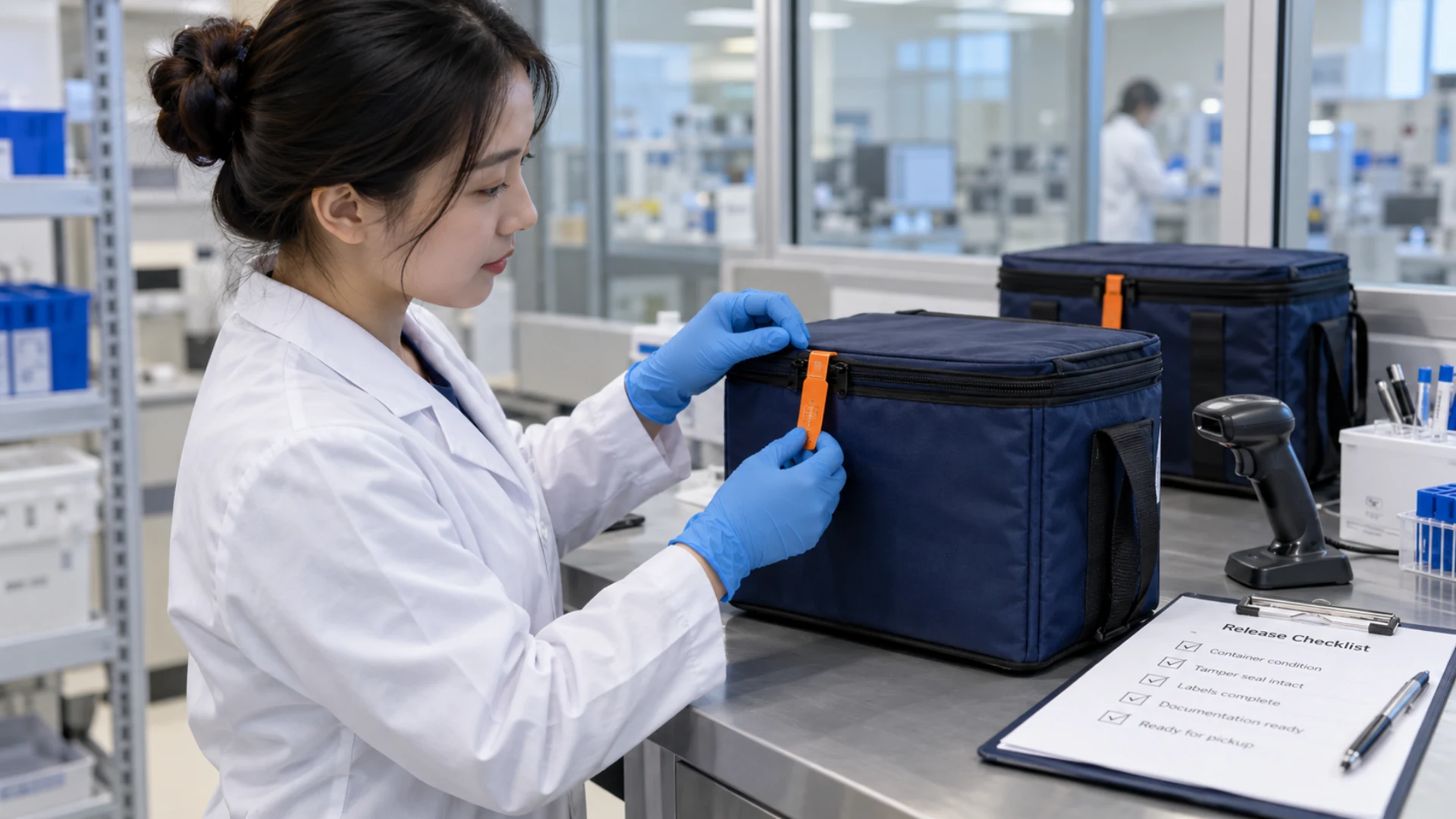
Agree on a readiness checklist owned by the collection site. It can cover the number of packages, the approved shipping container, completed shipping documentation and the person authorized to release the shipment. The laboratory or qualified shipper must define material-specific requirements. The courier’s schedule should not be used as a substitute for that review.
Separate the ready time from the preferred pickup time in conversations with your courier. Ask what happens if the package is not ready when the driver arrives. Identify who may authorize waiting, revising the collection or choosing another plan. That prevents staff from making inconsistent decisions while the vehicle is at the door.
Build Access And Release Instructions Into The Plan
A full address is the start of an access plan, not the end. Tell the courier which entrance to use, where collection occurs and whether there is a loading area, reception desk or security process. For multi-building sites, use a precise building and department description. A reference to “the lab” can be ambiguous on a campus with several laboratory spaces.
Provide a working release contact and a backup escalation contact. Identify the receiving role rather than assuming one named person will always be available. Changes of shift, breaks and staff absences can make an otherwise correct contact list unusable. Keep instructions short enough that the person coordinating the order can review them quickly.
If access rules change, update the recurring order instructions as well as informing the current driver. A one-time phone explanation does not automatically improve tomorrow’s pickup. The goal is a reliable operating record that reduces repeated clarification without collecting unnecessary clinical information.
Choose A Service That Fits The Collection Pattern
Recurring collections with stable readiness and receiving windows may fit scheduled delivery. Several local collection points feeding one laboratory may be better evaluated as a fixed collection route. A time-sensitive exception can call for a separately confirmed STAT delivery request. These choices solve different scheduling problems.
A fixed route is not automatically the best option simply because you have several sites. Readiness patterns, stop sequence and the final receiving window all matter. One early stop that routinely releases late can affect the rest of the route. Review the whole sequence rather than checking each collection in isolation.
For sustained workloads, dedicated courier service may be worth discussing. Confirm the coverage hours, expected work, vehicle suitability and exception process. Dedicated capacity does not remove the need for clear handoffs or receiving instructions. It changes the coverage arrangement, while the operational responsibilities still need to be explicit.
Use This Backward-Planning Worksheet
Complete one worksheet for each meaningful collection pattern. Keep actual local travel and access assumptions separate from laboratory-defined material requirements. Review the worksheet with both the releasing site and the receiving laboratory before proposing a schedule.
| Planning Item | What To Confirm | Responsible Team |
|---|---|---|
| Acceptance window | Department, handoff location and latest accepted receiving time | Receiving laboratory |
| Arrival process | Entrance, security, parking and transfer to the recipient | Receiving site and courier coordinator |
| Local journey | Expected route, traffic considerations and scheduling margin | Courier team |
| Release routine | Package count, readiness and authorized release contact | Collection site |
| Material requirements | Approved packaging and specimen-specific transport instructions | Qualified shipper and laboratory |
| Exception decision | Who may approve a revised collection or receiving arrangement | Customer’s authorized coordinator |
The value of this worksheet is the ownership column. If an answer is missing, the responsible team is clear. Without ownership, a schedule can look complete while important assumptions remain unresolved between the collection site, dispatch and the laboratory.
Use Tracking To Support Decisions, Not Replace Them
Live tracking can help a laboratory team follow an active collection and estimated arrival. An ETA should be treated as an estimate, not as evidence that the laboratory has accepted the shipment. The receiving event still needs its own confirmation. Keep order references consistent so staff can identify the right collection without searching through unrelated updates.
Define which changes require action. A revised ETA near a cutoff may need a call to the receiving laboratory, while an ordinary progress update may need no intervention. Decide who watches the delivery and who has authority to change the receiving plan. Broadcasting every update to every employee often produces noise rather than useful visibility.
When a handoff is completed, the appropriate proof-of-delivery record provides a reference for operational review. It does not establish laboratory suitability or resolve clinical acceptance questions by itself. Separate transport completion from the laboratory’s own intake decisions.
Agree On Exceptions Before The Cutoff Is At Risk
List the events that can disrupt the plan: a late release, an unavailable recipient, changed access, an unexpected package count or a revised receiving window. For each, specify the first contact, the decision owner and the approved next action. A courier should not have to guess whether to wait, leave, return or deliver elsewhere.
For a late-ready collection, the useful question is not only “Can a driver still come?” It is also whether the laboratory can receive the shipment under the proposed revised timing. Collection and receiving decisions should be coordinated. Sending a package toward a closed receiving point creates another problem rather than solving the first one.
Keep an exception log with the operational cause, action taken and instruction change needed. Avoid unnecessary patient data in the log. A recurring delay may indicate that the schedule needs revision, not that someone should work harder to preserve an unrealistic departure time.

Test The Schedule Before Expanding It
Start with a defined collection pattern and review the first operating days. Record when packages were ready, when release occurred, what access required and when the receiving handoff finished. This gives you a more useful baseline than a simple delivered/not-delivered count. A completed trip can still reveal avoidable waiting at either end.
Include the people who prepare packages and receive them in the review. Managers may describe the planned workflow accurately, while frontline staff can explain where it differs from the daily routine. Small changes to the release point, recipient role or instruction wording can make the schedule easier to follow.
Decide what success means before the pilot. It may include meeting agreed windows, reducing ambiguous instructions and creating usable completion records. Do not invent a percentage target from a marketing claim. Use the customer’s actual requirements and the confirmed service arrangement to assess whether the collection plan is ready to expand.
Confirm The Local Route, Not Just The State
MOVE supports local same-day delivery needs in markets across the country. That does not mean every address, material or requested window can be served automatically. Review your pickup and destination together with the service team. A state name is a useful starting point, but it is not a confirmed collection commitment.
Teams planning collections in California, Texas or Arizona can explore the locations map and then share their local route details. Include the actual laboratory receiving window and the releasing site’s readiness pattern. These details matter more than a broad label such as western or central coverage.
Keep the scope local. This guide is about collection-site-to-laboratory journeys within a local service market, not interstate freight or cross-country specimen transport. Ask for a confirmed plan for the specific pickup and receiving location rather than extrapolating from a national driver presence.
Why MOVE Fits A Clearer Laboratory Collection Plan
MOVE’s laboratory courier solutions bring service planning and delivery visibility into the same conversation. The starting point is your collection pattern: where packages become ready, who releases them, which local laboratory receives them and when that handoff needs to occur. From there, the team can evaluate scheduled, fixed-route or time-sensitive service options.
Our proprietary platform supports tracking and electronic proof of delivery so your team has an operational reference during the journey and after the handoff. Technology is most useful when it follows a sound plan. It should make agreed instructions easier to use, not conceal unresolved receiving assumptions behind a dashboard.
The next step is a practical discussion, not a blanket promise. Share your local collection details through Quick Quote, or start an account request if you are preparing recurring service. A MOVE team member confirms requirements and availability before service is scheduled.
Laboratory Collection Planning Questions
Should The Pickup Be Scheduled At The Last Possible Minute?
Usually that creates unnecessary fragility. Work backward from the actual receiving requirement and allow for the release routine, local journey and access process. The appropriate margin depends on the route and site requirements; there is no universal number that makes every collection safe or acceptable.
Can Tracking Confirm That A Specimen Is Acceptable?
No. Tracking describes operational progress. Clinical suitability, packaging requirements and receiving acceptance remain separate decisions for the responsible laboratory and qualified personnel. A completed courier handoff is useful documentation, but it should not be represented as a clinical quality judgment.
What If A Recurring Collection Is Ready Late?
Use the agreed exception contact and decision process. Review both the pickup change and the receiving window before choosing a revised delivery plan. If late readiness happens repeatedly, adjust the operating schedule rather than treating every day as an unexpected emergency.
What Information Should We Send With A Quote Request?
Provide local addresses, collection frequency, readiness and receiving windows, package counts and operational handling requirements. Avoid sending patient records through a public inquiry. The medical courier quote request checklist explains how to prepare a useful first conversation without overloading it.
Give Your Next Collection A Clearer Plan
Share the collection site’s ready time and the laboratory’s receiving window. MOVE can help you evaluate the local courier arrangement that fits the work.
Quick QuoteStart An Account