
A boxed medical device, a replacement supply order and a piece of mobility equipment can all be described as a medical delivery. They do not necessarily require the same vehicle, loading plan or receiving arrangement. A useful booking request explains the packaged shipment and the handoff, not just the product category.
For medical suppliers, the important question is: what needs to be confirmed so the item can move from your release point to an authorized recipient without avoidable surprises? A few practical details can reveal whether the request is straightforward or needs a closer service review.
This guide helps supplier teams prepare local equipment delivery requests. It covers packaged size, weight, access, timing, recipient instructions and scope. It does not provide installation instructions, clinical advice or a promise that every item can be accommodated. MOVE confirms suitability and availability for the actual request before service is scheduled.

Describe The Packaged Shipment, Not Only The Device
The product name gives context, but the packaged item determines much of the transport discussion. A compact device in a protective carton differs from an assembled mobility item or several large supply boxes. State the number of pieces, approximate packaged weight and overall size, particularly when the shipment is bulky or unusual.
Explain whether the pieces remain separate or travel as one unit. If there are multiple cartons, identify how they are counted at release and receipt. A clear package count helps both ends of the handoff reference the same shipment without relying on a vague description such as “the equipment order.”
Dimensions do not need to be a barrier to every initial inquiry, but useful measurements should be provided when they affect vehicle fit or access. Do not guess if a large item is uncertain. Ask the warehouse or responsible preparation team to confirm the packaged size before requesting a vehicle arrangement.
Confirm Packaging And Release Readiness
The supplier should prepare the shipment for the agreed delivery and define relevant transport instructions. Confirm that packaging is complete and the item can be released at the requested pickup time. An order marked ready should not still be waiting for parts, paperwork or a staff member who is unavailable.
Describe any handling instructions that affect the service. If the item has a required orientation, protective packaging or a manufacturer’s transport requirement, the responsible supplier should identify it accurately. Do not assume the courier can infer technical requirements from the product name or appearance.
Keep clinical use and equipment setup separate from transport. The courier’s task is the confirmed delivery scope. Suitability for a patient, calibration, installation, assembly and instruction in use are different responsibilities unless a separate qualified service has been explicitly arranged. A delivery booking should not imply those services are included.
Ask About Vehicle Fit And Loading Conditions
Share the packaged size and weight with the service team before the collection. Explain the release location: loading area, warehouse counter, business suite or another approved point. If the item needs particular loading equipment or more than ordinary package handling, make that requirement visible rather than adding it when the driver arrives.
A standard local courier vehicle should not be assumed suitable for every piece of medical equipment. The team needs enough information to evaluate the request. Vehicle capacity, package fit and the agreed loading scope are practical constraints, not details that can be solved by selecting a faster delivery window.
Where the supplier has its own loading personnel, clarify their role. Where the destination has receiving assistance, confirm it as well. The point is to define the handoff between parties so nobody relies on unspoken assumptions about who lifts, moves or positions a heavy or awkward shipment.
Check The Destination Beyond Its Street Address
Identify whether the delivery goes to a clinic, hospital department, business receiving point or customer location. Include the approved entrance and authorized recipient. If the address includes a suite, building or campus department, use the actual receiving description rather than the supplier’s billing record alone.
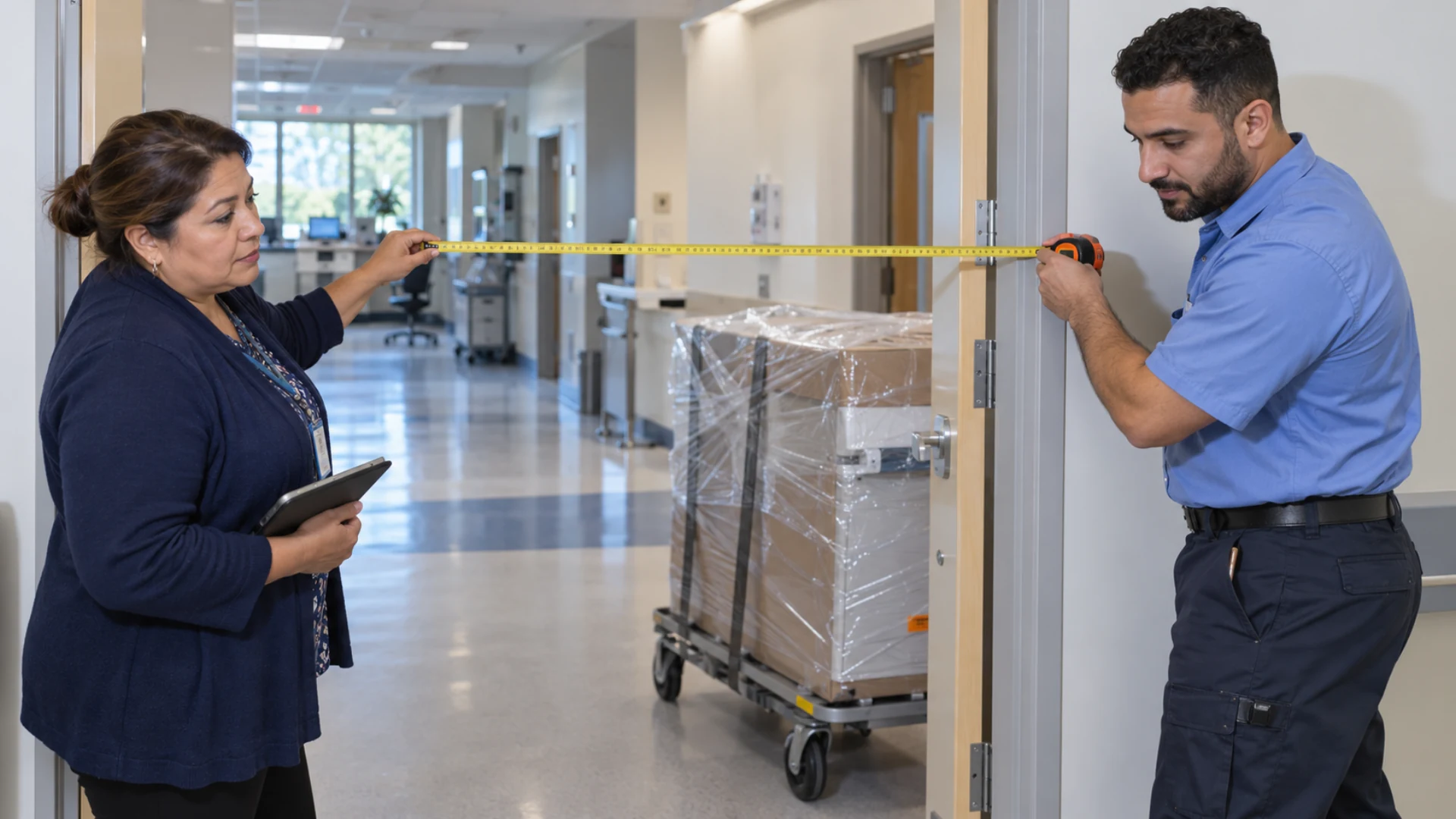
Access can affect the plan. A shipment that fits the vehicle may still need a review if the receiving location has stairs, a restricted doorway, limited loading space or a different handoff point from the public entrance. Ask the customer about the conditions that matter to the packaged item.
Do not promise inside placement or installation to a customer unless that work is part of a confirmed service. A local delivery and a specialized setup appointment are not interchangeable. Clear wording protects the customer’s expectations and gives the courier team a realistic description of what completion requires.
Align The Recipient With The Delivery Window
Confirm who can accept the shipment and when that recipient or receiving role is available. A business may be open while its equipment receiving team is not. A customer may need a coordination call before the visit. The delivery window should fit the actual handoff, not simply the site’s public hours.
Give the ready time at pickup and the requested receiving time together. If preparation changes, review whether the destination can still receive under the revised schedule. An urgent pickup does not solve an unavailable recipient. The release and receiving plans need to remain connected.
For time-sensitive local needs, discuss STAT service. For recurring replenishment, consider scheduled delivery. The right conversation depends on the workload and receiving constraints, not the assumption that all equipment requests require the same service label.
Use An Equipment Delivery Booking Worksheet
Complete this worksheet before asking for a quote or promising a delivery arrangement to the recipient. Assign unresolved questions to the supplier or customer contact who can confirm them. The worksheet supports service evaluation; it does not automatically establish acceptance of a shipment.
| Detail | What To Record | Why It Matters |
|---|---|---|
| Packaged shipment | Number of pieces and useful description | Both ends can check the same handoff |
| Size and weight | Confirmed measurements for bulky or unusual items | Vehicle and loading fit can be reviewed |
| Release point | Address, entrance, contact and ready time | The collection can be planned realistically |
| Receiving point | Destination, department or suite and authorized recipient | The driver can reach the agreed handoff |
| Access conditions | Known loading, doorway or receiving restrictions | Additional scope is not assumed |
| Timing | Ready time and recipient receiving window | Service options can be evaluated |
| Completion scope | Delivery record and any separately agreed work | Transport is not confused with setup |
Keep the final confirmed details with the order reference. If the package or destination changes, revise the request rather than expecting the courier to reconcile a new shipment with an old description. A current operating record is more useful than several inconsistent emails.
Before submission, have someone other than the requester read the worksheet and describe the handoff back to you. If that person cannot identify what will be collected, where it will go and who may receive it, the request still contains an ambiguity. This quick read-back is especially useful when sales staff, warehouse personnel and customer service each hold different parts of the order information.
Choose A Model For The Delivery Pattern
A one-off replacement item with a narrow local receiving need may require STAT review. A supplier delivering regularly to known customer sites may benefit from scheduled pickups. Several connected stops can be evaluated as a fixed route, provided package readiness and receiving windows fit the sequence.
For ongoing demand during defined hours, discuss dedicated courier coverage. Describe the expected workload and variation. Dedicated coverage is not unlimited vehicle space or an automatic agreement to perform specialized lifting and installation. The scope still needs to match the work.
Review the pattern with MOVE’s medical supplier delivery team. Bring a typical order and an unusual one. Comparing both can reveal which requests fit a routine arrangement and which need a separate review before your staff promise the same process to every customer.
Check The Assumptions Behind The Quote
Use the same packaged shipment, addresses and receiving window when comparing estimates. A quote for a small carton at an accessible counter is not directly comparable with one for a bulky item requiring different loading or access conditions. The price should be understood in the context of the confirmed work.
Ask what is included, which changes require review and how waiting or unsuccessful receiving attempts are handled. Do not fill a budget worksheet with an invented per-mile price. Route details, timing, stop count and scope can all affect the applicable estimate.
The local medical courier pricing guide explains how to build a like-for-like comparison. Its most useful principle for suppliers is simple: compare the same job. If vehicle or handoff assumptions differ, clarify them before treating a lower number as the better solution.
Define A Useful Completion Record
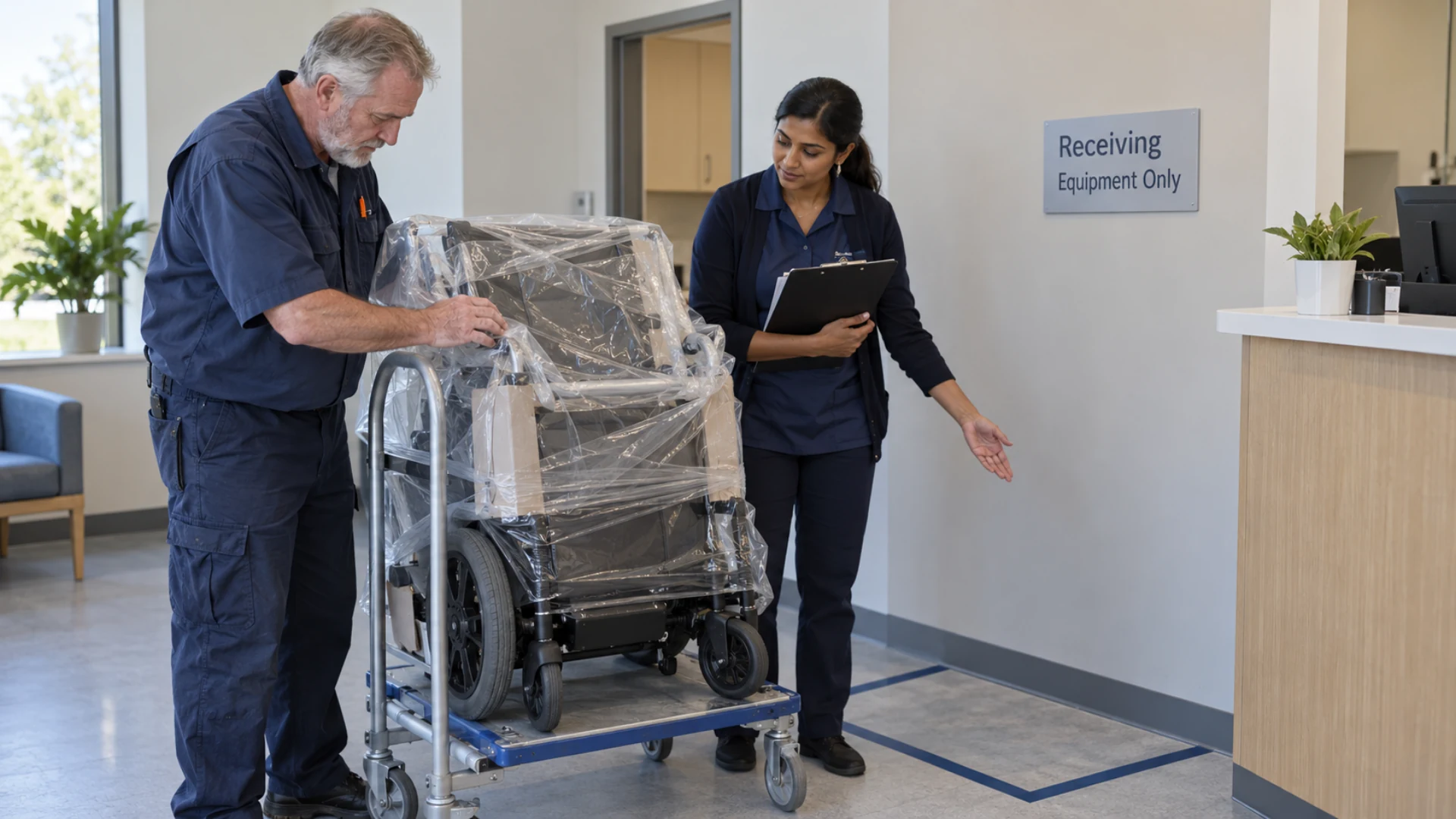
Ask what information your team needs after the delivery: an order reference, completion time, authorized recipient or other agreed handoff fields. Electronic proof of delivery helps provide an operational reference, but its scope should be understood before someone relies on it to answer a different question.
A completed courier handoff does not establish that the equipment was installed, tested or accepted for clinical use. Keep transport completion separate from supplier service obligations. If the customer needs a setup appointment or technical sign-off, coordinate that process explicitly with the qualified provider.
Use tracking visibility for the local journey and completion records for the handoff afterward. These functions can help customer service answer practical questions without claiming that technology removes every exception or proves the condition of every internal component.
Plan Exceptions And Confirm Local Coverage
Decide what happens if the recipient is unavailable, access differs from the description or the shipment is not ready. Identify a supplier contact who can approve the next action. A driver should not have to decide independently whether to leave equipment at an unapproved point or substitute another destination.
For service discussions in California, Arizona or Nevada, use the locations information as a starting point. Confirm the actual local pickup, destination, packaged item and requested window with MOVE. The map does not guarantee every address or shipment can be served.
After an exception, improve the next order’s instructions. If a building requires a different entrance or a customer needs a different receiving role, update the controlled record. Repeating an avoidable access problem is a signal to revise the plan, not simply to send the same request again.
Why MOVE Fits A Supplier’s Local Delivery Workflow
MOVE helps medical suppliers evaluate local delivery around the packaged shipment and the people at both ends. The service conversation addresses readiness, receiving windows and handoff scope, with STAT, scheduled, fixed-route and dedicated models available for review.
Our proprietary platform supports tracking and electronic proof of delivery so supplier teams can follow the journey and reference completion. The technology is useful because it supports a defined operating plan. It should not distract from vehicle fit, recipient authorization or the customer’s actual receiving needs.
Use Quick Quote to begin with a specific shipment. For repeat delivery work, request an account and share the typical pattern. A MOVE team member confirms the requirements, availability and next step before the request is scheduled.
Equipment Delivery Booking Questions
Are Dimensions Required For Every Request?
Not for every initial inquiry, but confirmed dimensions are useful when packaged size affects vehicle or access fit. If an item is bulky or unusual, provide the measurements needed for an accurate service review instead of assuming it will fit.
Does Delivery Include Installation?
Do not assume it does. Transport, inside placement, assembly and technical setup are different scopes. Confirm any additional work explicitly and use qualified personnel where required. A courier completion record is not an installation sign-off.
What If The Customer Cannot Receive?
Follow the agreed exception contact and decision process. The supplier and customer should identify the authorized next action. The driver should not invent a receiving arrangement to mark the delivery complete.
How Can We Prepare A Better Quote?
Send the actual addresses, packaged item description, useful size and weight, ready time and receiving window. Include loading or access conditions and frequency for recurring work. These facts support a clearer estimate and a better service-fit discussion.
Make The Next Equipment Handoff Easier To Plan
Bring MOVE the packaged shipment and receiving details. We will help you review the local delivery arrangement that fits the request.
Quick QuoteStart An Account