
A state on a delivery map answers a useful first question: where should you begin the conversation? It does not answer the last question: can a driver collect this package from this address and complete the agreed handoff at the time you need? For healthcare teams, understanding that difference prevents a coverage page from becoming an accidental promise.
MOVE has drivers across the country to support local same-day delivery needs. The work is local: pharmacy deliveries, laboratory collections, hospital transfers and medical supply handoffs within the relevant market. A nationwide presence is not a cross-country shipping service, and a highlighted state is not confirmation of every possible request inside its borders.
This guide shows how to use a coverage map productively. You will learn what to check at the address level, how to describe the delivery window and which details help the service team give a meaningful answer. The result is a clearer local request, whether you need one pickup or a recurring plan.

Read The Map As A Starting Point
Selecting a state on the MOVE locations map helps you explore local delivery options and the next step for that territory. It provides context and a route into the service conversation. It is not a live driver inventory, an automated acceptance or a guarantee that a particular vehicle is available at your preferred hour.
State boundaries are broad. A pharmacy in one city may have a very different local delivery pattern from a hospital in another part of the same state. A service team needs the actual pickup and destination, not only the state name, to assess the work. Geographic relevance and operational availability are separate questions.
Use the page to identify relevant services and prepare the request. Then ask for address-level confirmation. That is especially important when a receiving window, package type or access condition makes the delivery less straightforward than an ordinary nearby handoff.
Separate Nationwide Presence From Local Delivery
“Drivers across the country” describes the company’s broader network. “Local same-day delivery” describes the service you are asking to arrange. Neither phrase should be stretched into an assumption that packages move between states or that an entire state operates as one continuous delivery zone.
For example, an organization with facilities in California and Texas may discuss local needs in each market separately. A California pickup and local destination form one request; a Texas pickup and local destination form another. The presence of drivers in both states does not turn those two requests into a California-to-Texas shipment.
Keep this distinction in internal planning, too. If a procurement brief simply says “national courier coverage,” different reviewers may imagine different services. Describe the local markets, facility pairs and daily workflows instead. That gives the service team a scope it can assess without translating a broad phrase into unsupported assumptions.
Confirm Both Ends Of The Delivery
Provide the full pickup and delivery addresses, including the correct street number and relevant building or suite. A city name or ZIP code can help orient the request, but it does not identify the actual release point or receiver. Nearby properties can have very different entrances and operating hours.
Confirm which entrance is used for packages. A hospital’s public entrance may not be its receiving location. A laboratory may accept collections at a designated department. A supplier’s customer may need delivery to a staffed office rather than a warehouse door. Those details belong in the request before anyone assumes the destination is straightforward.
Review address accuracy with the site, especially after a department move or a new lease. A map pin may locate the property while missing the approved handoff point. The delivery plan should identify both. Our hospital receiving checklist explains the difference between arriving at a campus and completing the intended handoff.
Describe The Local Job, Not Just The Distance
Tell the service team what will be collected in operational terms. Include the package count, approximate weight, packaging form and any relevant handling instructions determined by your qualified staff. Do not place unnecessary patient information, diagnostic details or sensitive records in a general public inquiry.
Identify whether the request is a one-time local delivery, a recurring pickup, a connected multi-stop route or a need for defined courier coverage. These are different operating arrangements even when they share the same addresses. A single urgent delivery does not establish that a daily route has been reviewed.
Start with the appropriate service conversation: STAT delivery for a time-sensitive request, scheduled delivery for repeat pickups, fixed-route delivery for a local sequence or dedicated courier service for a sustained workload. Availability and scope still need confirmation.
Make The Timing Specific Enough To Assess
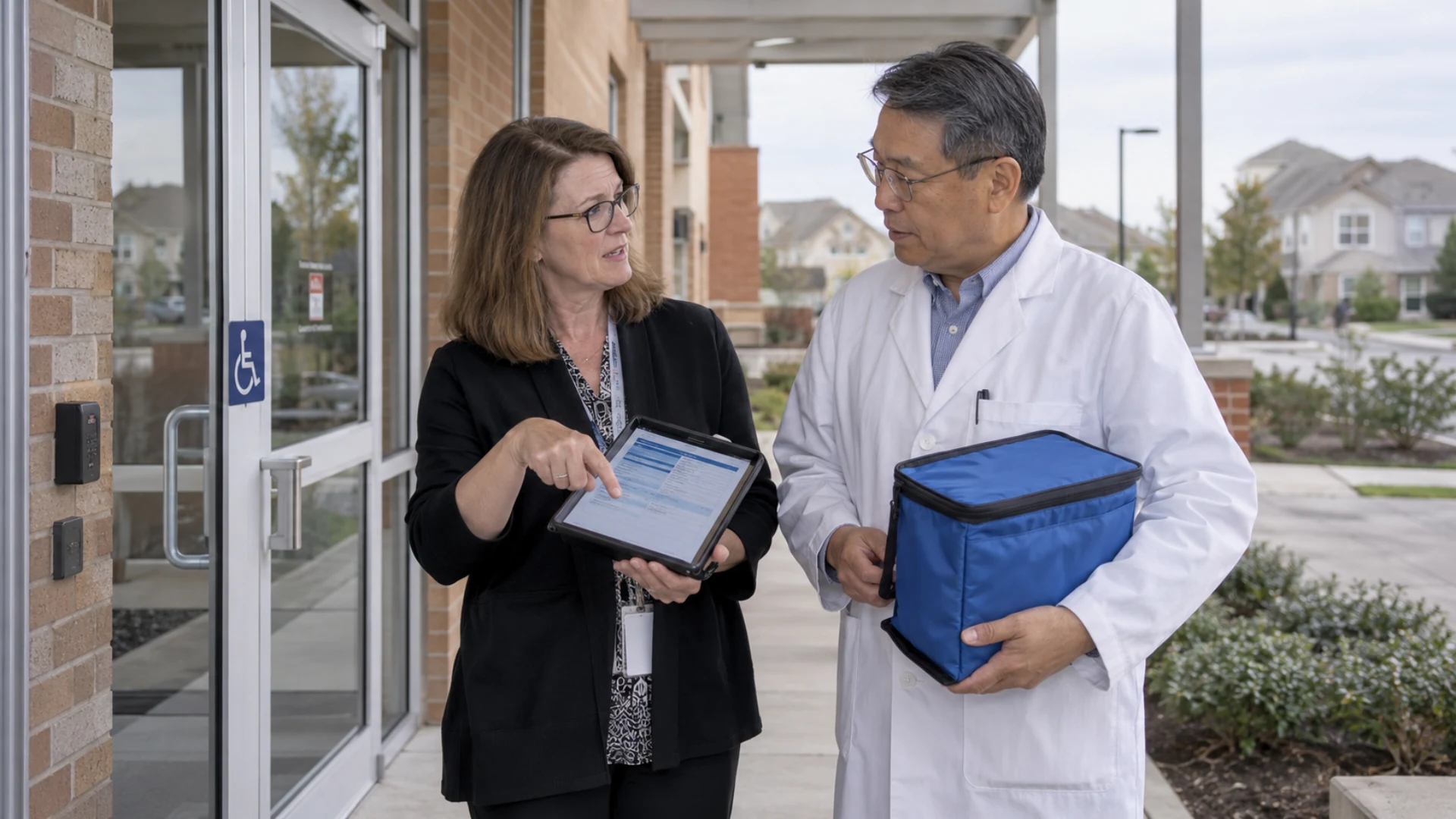
Distinguish when the package will be ready from when you would prefer the driver to arrive. A pickup cannot begin as planned if release checks are incomplete. Provide the realistic ready time and any variation your team expects, along with the destination’s receiving requirement.
State the relevant date and local time zone. “Tomorrow afternoon” may work in a casual conversation, but a delivery request needs a more precise reference. An organization coordinating several markets should avoid assuming that every location uses the head office’s clock.
Describe the receiving deadline as a handoff requirement rather than simply the time a vehicle reaches the property. If the destination desk closes before the building does, that difference matters. Ask the service team to confirm the requested window against readiness, local driving, access and the receiving process.
Use An Address-Level Coverage Worksheet
The following worksheet turns a state-level inquiry into a service-ready discussion. Complete what you know, mark what requires confirmation and assign someone to obtain missing site details. Do not fill a blank with a convenient guess just to make the form appear finished.
| Planning Input | What To Provide | What To Confirm |
|---|---|---|
| Local Market | State, city and actual facility pair | Availability for these addresses |
| Pickup | Full address, release point, ready time and contact | How the package is released |
| Destination | Full address, receiving point and window | Who can accept the delivery |
| Shipment | Packaged item category, count and approximate weight | Fit with the proposed service |
| Pattern | One-time, recurring, route or coverage need | The agreed service arrangement |
| Changes | Known access or schedule exceptions | Who approves a revised plan |
Keep the completed worksheet with the confirmed scope. If a later request changes a destination or adds several packages, compare it with that record. The original confirmation may not cover the new work. A short change review is more useful than discovering the difference after a driver has been requested.
Consider Site Access As Part Of Availability
A reachable address can still have a difficult handoff. Parking restrictions, controlled entrances, reception procedures and a specific receiving department can affect the operating plan. Provide the access information relevant to a package collection or delivery, not confidential building-security information that does not belong in a public form.
Identify a reachable site contact and an appropriate backup. If a door is locked or the receiver is unavailable, someone needs authority to clarify the next step. A phone number alone is not enough if the person cannot approve a change or does not work during the requested window.
Do not interpret address-level coverage as permission to leave a package anywhere on the property. The approved handoff instructions still apply. For pharmacy deliveries, recipient instructions require particular attention. The pharmacy service discussion should include how an unavailable recipient is handled.
Plan Multiple Markets Without Mixing Requests
If your organization operates in several states, create a separate local delivery brief for each market. Group requests by actual pickup and receiving relationships, not by a broad national label. This makes it easier to confirm service scope and keeps local contacts responsible for the instructions they know.
For example, a procurement team could review local facility pairs in California, Texas and New York. Each needs its own addresses, readiness and receiving details. None should be described as an interstate route simply because the same organization operates all three facilities.
Use a common request format across markets, but allow meaningful local differences. A clinic reception handoff and a medical supply receiving dock should not be forced into identical instructions. Consistency belongs in the planning process; accuracy belongs in the site details.
Avoid Five Common Coverage Assumptions
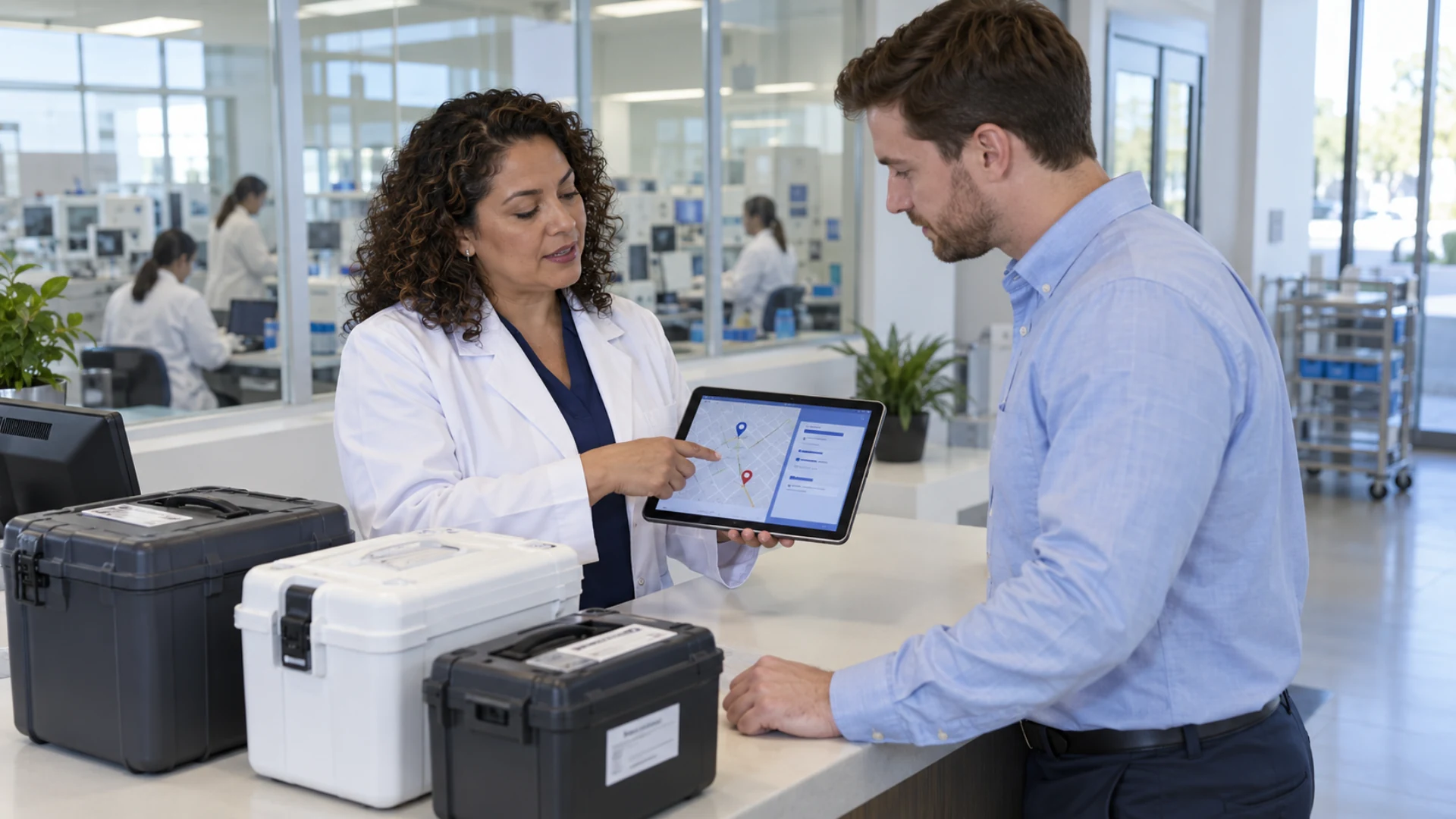
First, do not assume a selected state confirms every city. Second, do not assume a nearby driver is available for every item or vehicle requirement. Third, do not treat a map route as a confirmed service window. Fourth, do not infer receiving access from a public address. Fifth, do not assume one completed delivery establishes recurring capacity.
Each assumption skips a different planning question. The solution is not a larger disclaimer; it is a better request. Confirm the addresses, scope, ready time and handoff, then retain the answer. Your team can move forward with the agreed facts instead of relying on what a coverage graphic seemed to imply.
If information changes, reopen the relevant question. A new local destination, later ready time or different package profile may need another review. That does not mean the original confirmation was unhelpful. It means the work has changed and the plan should change with it.
Track The Confirmation Your Staff Actually Needs
Record who confirmed the request, what service was discussed, which addresses were included and the relevant timing assumptions. Keep the request reference available to the employees releasing and receiving the package. They should not have to reconstruct the conversation from several unrelated emails.
During the delivery, tracking provides an operational view of the journey where available. After the handoff, proof of delivery supports completion review. Neither replaces the initial agreement about what should be collected and where it should be accepted.
For recurring work, set a review when sites, schedules or volume change. A coverage confirmation is not a permanent guarantee for every future variation. Maintaining clear instructions lets the relationship develop around the actual work instead of an outdated first request.
Give the releasing and receiving teams the same confirmed version. If one site expects a lobby handoff and the other has approved a receiving desk, resolve that difference before the request proceeds. A simple read-back of the two locations and timing can reveal a misunderstanding that a map, distance estimate or company-wide coverage statement would never catch.
Why MOVE Makes Local Coverage A Practical Conversation
MOVE connects local same-day delivery needs with the people and visibility required to coordinate them. We work with laboratories, hospitals and clinics, pharmacies and medical suppliers. The service conversation begins with the handoff your team needs, not a broad freight promise.
Our nationwide driver presence helps organizations explore local support in different markets. Our proprietary platform supports tracking and documented completion. The map, service pages and account conversation work together: explore the territory, describe the local request and confirm the arrangement before service begins.
Bring the actual addresses and receiving requirement to Quick Quote. If your organization has recurring or multi-market local needs, Start An Account to begin a broader review. We will identify what needs confirmation rather than treating a state selection as a booking.
Local Coverage Questions
Does Selecting A State Schedule A Delivery?
No. The map helps you explore options. A request still needs address-level review, service confirmation and scheduling through the agreed process. A state selection is not an order acceptance.
Does Nationwide Presence Mean Cross-Country Shipping?
No. MOVE’s website describes local same-day delivery supported by drivers across the country. Discuss local pickup and delivery needs in each market separately rather than assuming interstate transport is included.
Can A ZIP Code Confirm The Entire Request?
A ZIP code helps orient the inquiry but does not identify the release point, receiver, timing or package requirements. Provide the full addresses and operating details for a meaningful confirmation.
What If We Are Opening A New Facility?
Share the new address, receiving setup, intended start date and expected delivery pattern. Confirm those details before applying an existing arrangement to the new site, even if it is in a state you already use.
Turn A State Selection Into A Clear Local Request
Choose the territory, gather the two addresses and tell us when the package will be ready. MOVE can then review the local delivery your team actually needs.
Quick QuoteStart An Account